

I love to travel.
I’ve been to five of the seven continents so far, and my passport is slowly running out of room for stamps and visas. Somewhere in my early twenties, I decided I was going to see the world. I didn’t have a detailed plan. I just knew I wanted to go.
All I needed was a passport and a willingness to move.
To this day, I’m still trying to figure out how to get to Antarctica. It’s going to happen.

The thing I love most about travel isn’t necessarily the destination. It’s the movement. The idea that a single person can wake up in one place and find themselves somewhere completely different a day later. The journey changes you, but it also changes how you see the world around you.
Lately, I’ve been thinking about content the same way.
For years, most of us created content as if it would live in one place. A blog post belonged on a blog. A newsletter belonged in an inbox. A social post belonged on a social platform. Each piece had a destination and stayed there.
That isn’t how the internet works anymore.
Content increasingly moves between websites, newsletters, apps, recommendation engines, AI systems, voice assistants, social platforms, and experiences that often reinterpret information before audiences ever see it. In many ways, content is traveling farther than ever before.
Most content was never designed to travel
Brooke lives in Raleigh, North Carolina, where her lifestyle blog, The Sunday Suitcase, has grown into a full-time business. What started as a place to share travel stories, home projects, routines, and everyday moments now supports a newsletter, social channels, brand partnerships, digital products, and a growing archive of content that reaches people in dozens of different ways.

For a long time, she would publish a blog post, share it on social media, send it to her email list, and move on to the next idea. The content lived in a few predictable places, and keeping everything updated felt manageable. Then the business grew.
A single travel guide became a blog post, a newsletter feature, multiple Pinterest pins, a Reel, a downloadable resource, and a collection of social posts. The same information started appearing across more channels, more platforms, and more systems than Brooke could easily keep track of.
One afternoon, she needed to update a hotel recommendation in an older travel guide. The change itself took less than a minute. Finding every place that recommendation appeared took nearly an hour. Her content now had more places to go than ever before.
The internet had changed. Content now moved through websites, newsletters, social platforms, recommendation engines, apps, and increasingly, systems that repackaged information before audiences ever saw the original source. Most content was never designed for that kind of journey. But that’s exactly the journey modern content is expected to take.
The content became the source
Brooke didn’t solve the problem by working longer hours or adding another tool to her stack. Instead, she started looking at her content differently and started treating her entire content library and channels as different versions of the same idea. The destination changed, but the information often stayed remarkably similar.
A travel guide wasn’t just a blog post anymore. It had recommendations, photos, packing tips, itineraries, and personal stories. Once she started thinking about those pieces separately, repurposing became easier because she wasn’t constantly rewriting content from scratch.
Her blog became the source; everything else became an adaptation.

The copy-and-paste internet
Since the twenty-teens, creators were taught to think about content as finished pieces. A blog post was a blog post. An email was an email. An Instagram caption was an Instagram caption. Every channel got its own version.
That approach worked when content lived in fewer places.
Today, creators are publishing into ecosystems rather than individual channels. A single recipe might appear in a newsletter, an app, a recommendation engine, a social feed, and an AI-generated summary.
The irony is that creators are often doing more publishing work than ever while producing roughly the same amount of information. The content isn’t multiplying. The destinations are.
Many content teams are discovering that the old copy-and-paste model simply doesn’t scale anymore.
What brands figured out first
While creators are debating SEO, AEO, AI Overviews, and traffic declines, some of the world’s largest organizations are quietly changing something much bigger. They’re changing how content gets created.
Instead of building content separately for every channel, many brands are moving toward modular content systems. Product descriptions, FAQs, images, specifications, and promotional copy are being broken into smaller reusable components and stored in central repositories.
They’re not creating content for websites, apps, kiosks, voice assistants, and future platforms individually; they’re creating content once and distributing it everywhere. The content stays consistent, updates happen faster, and teams spend less time rewriting and more time creating. Most importantly, the content becomes easier to reuse.

Why this matters beyond enterprise
At this point, you might be thinking, “That’s great for large organizations, Sandie, but I run a blog.”
That’s exactly why it matters.
The same forces driving enterprise content transformation are affecting creators too. The number of places your content can appear keeps growing. Your content might show up on your blog, in your newsletter, inside a recommendation engine, in a voice assistant response, on a mobile device, or inside an AI-generated summary.
So it’s not whether content will travel. It’s whether your content is prepared for the journey.
The COSE™ connection
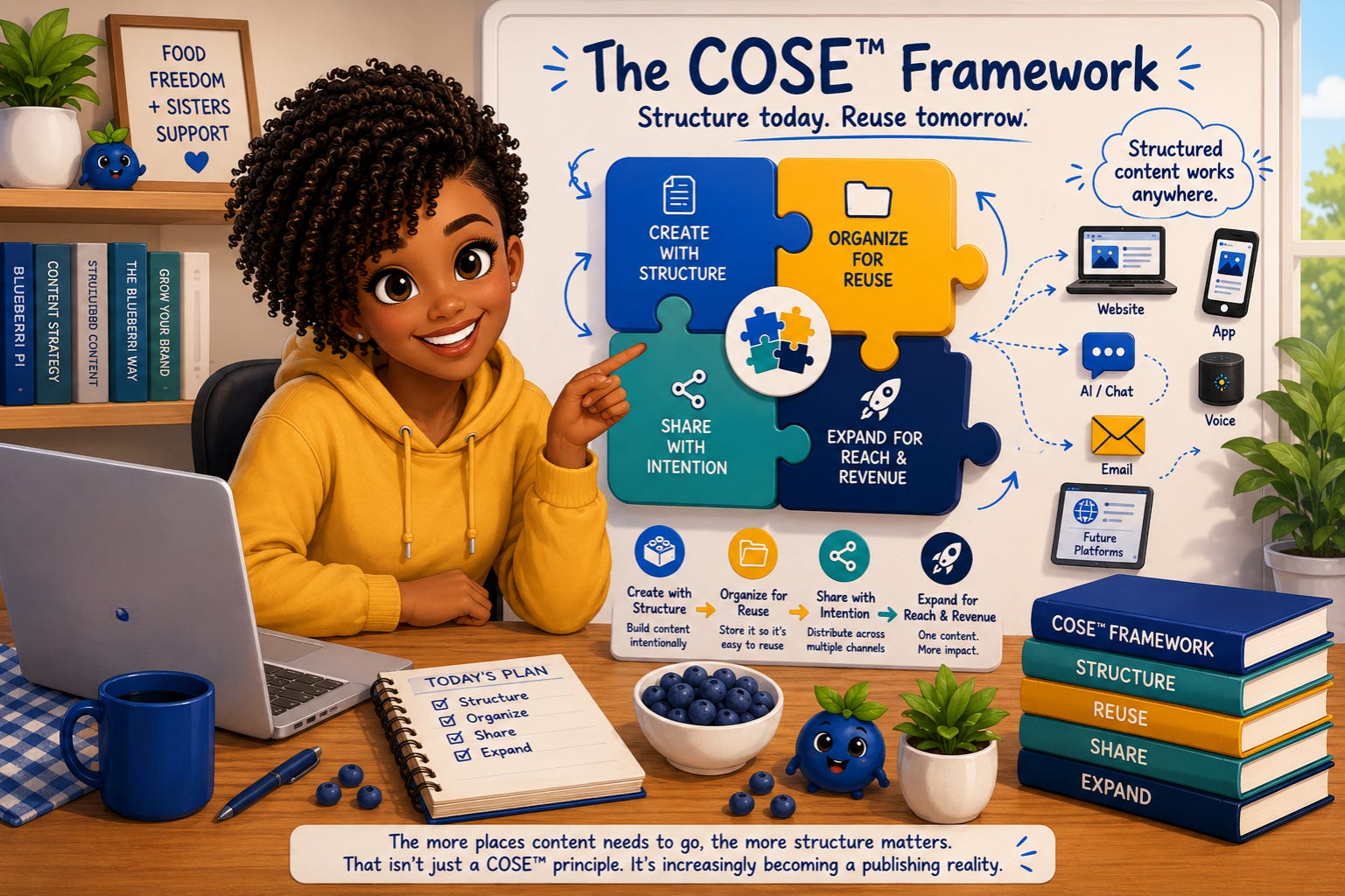
This trend connects directly to the COSE™ Framework. It’s the framework I created to help creators and content teams operationalize all the advice I give.
Create with Structure, the first pillar, means building content intentionally so it can be reused later. Organize for Reuse means storing information in ways that make that reuse possible. Those two ideas create the foundation for everything that comes next.
When content is structured and reusable, it becomes easier to Share with Intention across multiple channels. It also becomes easier to Expand for Reach and Revenue because the same content can support more experiences without requiring more work.
The more places content needs to go, the more structure matters. That isn’t just a COSE™ principle. It’s increasingly becoming a publishing reality.
The future may look more modular than we think
I don’t think most creators need to rush out and implement enterprise content management systems. What I do think is that creators should start paying attention to the direction the industry is moving.
The internet increasingly rewards content that can move. AI systems prefer structured information. Platforms prefer consistency. Audiences expect content to appear wherever they happen to be. Every year, the number of destinations continues growing.df
Meanwhile, most workflows still assume content lives in one place.
Discovery has places to go, too
Content isn’t the only thing becoming more distributed.
The way people discover content is changing as well. While Google remains the dominant search engine, users are increasingly finding information through AI assistants, recommendation engines, social platforms, communities, and alternative search tools.
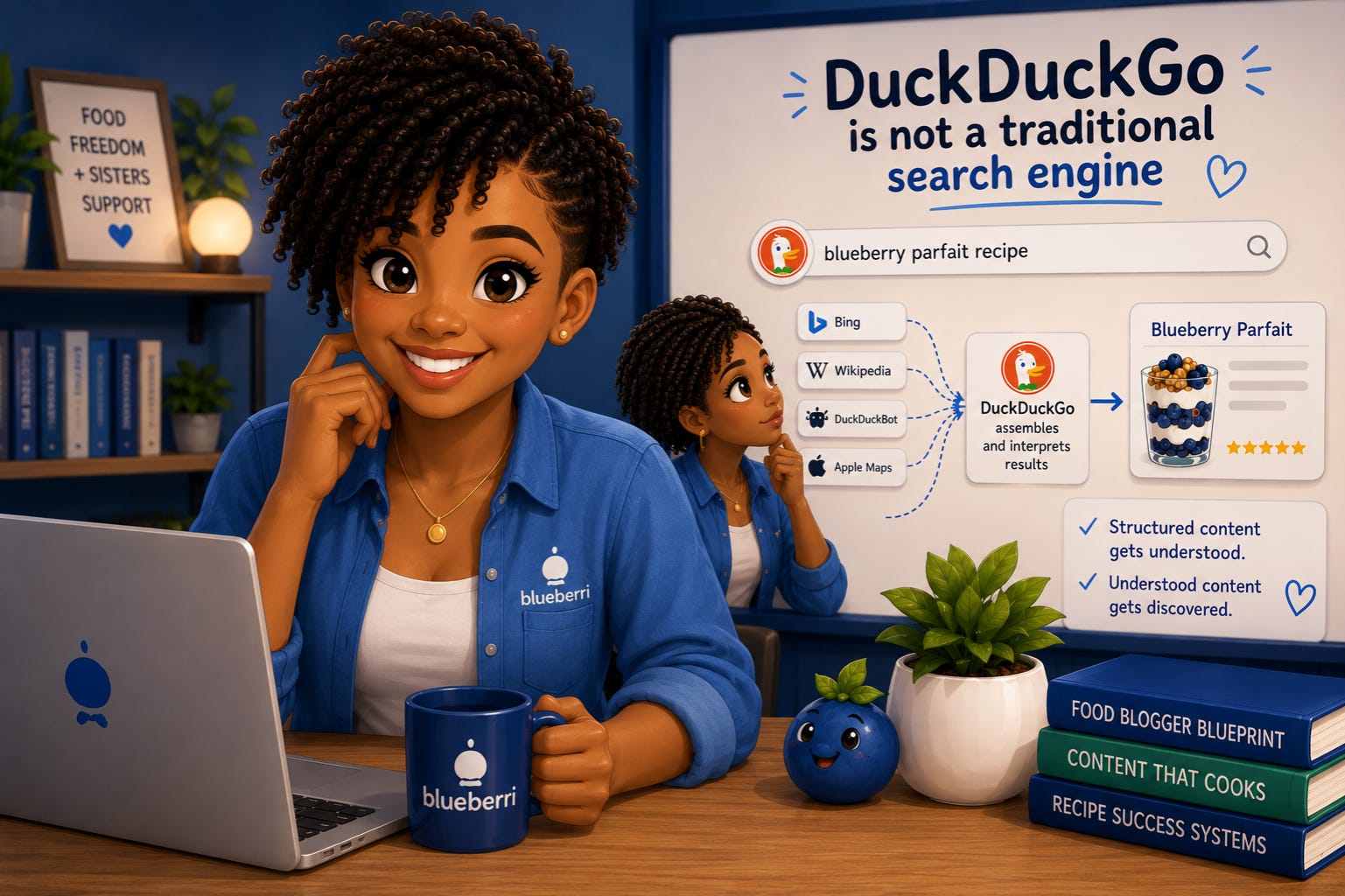
One example is DuckDuckGo. Unlike traditional search engines, DuckDuckGo takes a different approach to search and privacy while still delivering results from a variety of sources. As creators think about the future of discoverability, understanding alternative discovery channels becomes increasingly important.
If you missed it, I recently published a guide explaining how DuckDuckGo works, where its results come from, and why it matters in today’s evolving search landscape. Keep an eye out, because I’ll be exploring more search engines soon.
Read the complete guide to how DuckDuckGo works and where its search results come from.
Blueberri Pi updates
Starting with the next issue, I’ll begin introducing paid content for Blueberri Pi.
Free subscribers will continue receiving the full weekly issue every Friday. Paid subscribers will receive additional resources designed to help put these ideas into practice, including framework guides, visual explainers, worksheets, templates, and behind-the-scenes notes.
More details next week.
I’m also excited to share that the Blueberri Podcast is launching soon.
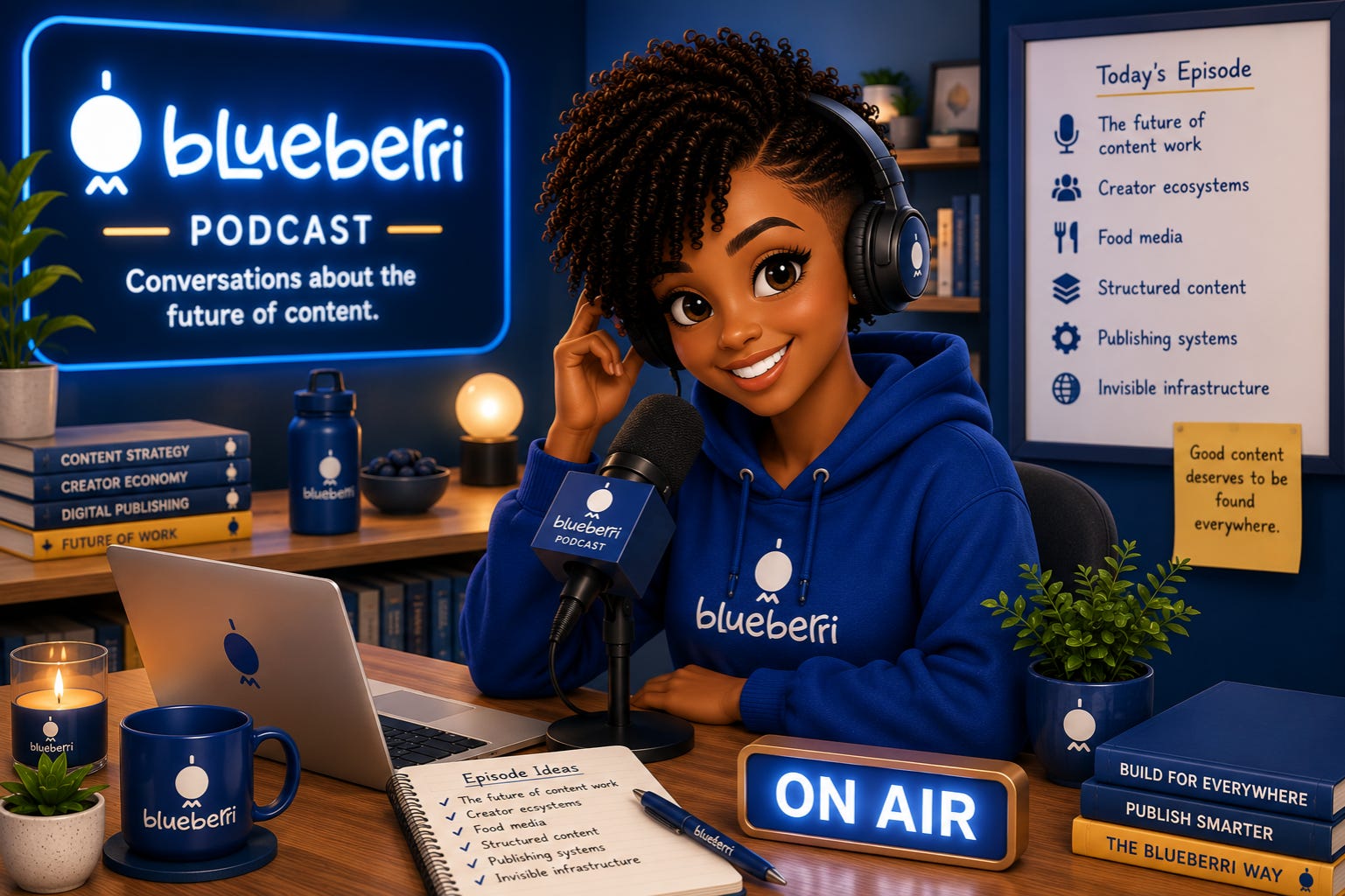
This voice-only podcast will explore the future of content work, creator ecosystems, food media, structured content, publishing systems, and the invisible infrastructure shaping how information moves through the modern internet. Think of it as the conversational companion to Blueberri Pi.
Some ideas work best as essays. Others deserve a conversation.
Thanks for reading.
See you next Friday!
This is so helpful and true, Sandie! I only write an article every couple of weeks but am learning how to spread it out over other platforms and on Notes here. Thanks for the encouragement so I don't feel like I have to keep creating entirely new things on each platform every day.