
I haven’t published a Blueberri Pi issue in a couple weeks.
The flu had other plans.
Sometimes the best thing you can do when you’re sick is step away from the screen and let your brain rest instead of forcing ideas onto a page. The funny thing is, when you build your content well, it keeps working even when you’re not.
That’s something I’ve been thinking about a lot lately. Not just because I was sick, but because I’m deep in the editing phase of my book right now.
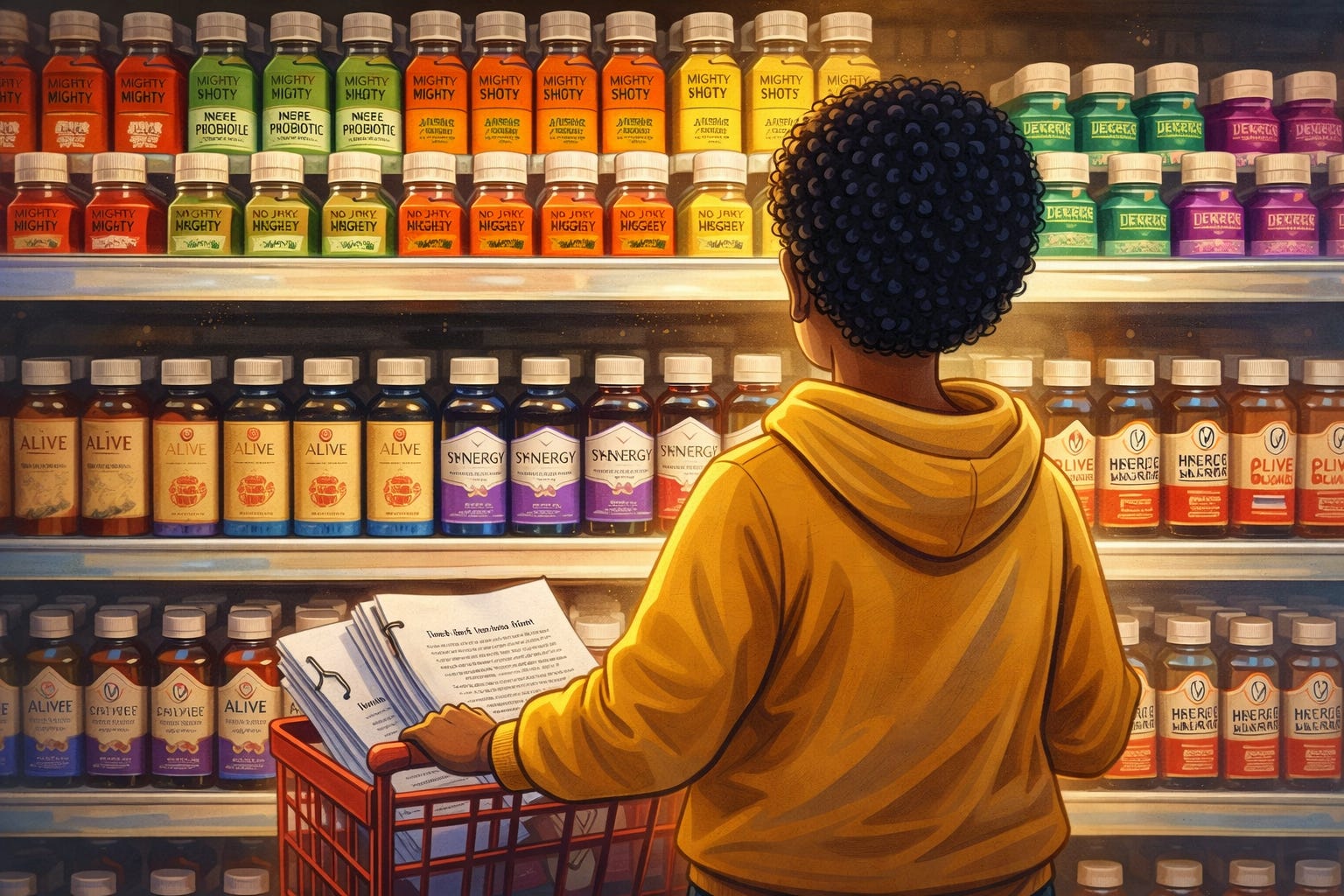
Yes, the book is still happening. All the words are written. Now I’m in substantive editing with my editor, the wonderful AJ Harper.
AJ’s job isn’t to change what I’m saying. The ideas and words are still mine. But she helps make sure the book actually serves the reader. She’s the one gently reminding me when I repeat myself, when I lean too hard on punctuation (apparently I really love colons), and when an idea needs to be clearer.
Her core philosophy is “A book isn’t about something. It’s for someone.”
This book I’m writing is for you.
I originally hoped to release it this year. But at some point, I realized rushing the timeline wouldn’t serve the people I’m writing it for. I get one shot to make this book right. So I pushed the release six months.
That felt like the least I could do.
My goal with this book isn’t just to explain the COSE™ framework. I want to show you what it looks like in practice as I build my own creator ecosystem.
Create with structure.
Organize for repurposing.
Share with intention.
Expand for reach and revenue.
Every step of my own work is part of that process and one part of the framework has been especially on my mind lately: organize for repurposing.
Because once you start looking closely at how content moves across the internet, something strange becomes obvious. Most content isn’t actually reused, it’s rewritten.
The rewriting cycle
Think about how most recipes move across the internet.
A creator writes a blog post. Someone summarizes it for social media. Someone else adapts it into a video. A platform reformats it into its own structure, and another platform extracts pieces of it for search results. At every step, the same content is interpreted again and again. Instead of moving cleanly through systems, it gets translated repeatedly, which is why so much effort online feels duplicated. Creators feel it first, but they’re not the only ones dealing with it.
The moment your blog becomes a business
If you’ve advanced your blogging business beyond just yourself, you likely have a content team now.
Maybe it’s a VA uploading recipes, someone helping with photography or editing, someone managing Pinterest or social media, or developers and SEO specialists helping behind the scenes. The moment multiple people touch your content, something important changes: content stops being a personal workflow and becomes infrastructure.
Infrastructure needs structure. Without it, every person on the team ends up reinventing the same work in slightly different ways. Descriptions get rewritten, instructions get reformatted, metadata gets added inconsistently, and content gets copied from place to place. The system itself was never designed for reuse.
This isn’t just for creators
The exact same thing happens inside companies.
Content teams rewrite the same product descriptions across multiple channels, marketing teams rewrite the same explanations for every campaign, and product teams rewrite documentation every time a feature launches. Everyone is working from the same information, but without structured content that information has to be recreated every time it moves. Instead of flowing through systems, content becomes a constant rewriting project, and the bigger the organization gets, the more expensive that cycle becomes.
Creators just feel it sooner.
Structure changes how content moves
Structured content changes the model. Instead of writing everything as a single block of text, the content is organized into meaningful pieces, however those pieces mean for you. Each piece becomes data that systems can understand. When that happens, the same content can move across platforms without being rewritten every time.
If your content is food, your recipe can appear on your website, a cooking app, a search result, or a voice assistant without someone manually reformatting it. The content is still yours.
But it’s now designed to travel.
Meet Gus
Gus is a zillennial food creator from North Carolina.
That’s not actually his real name. People started calling him ‘Gus’ when he was a kid, and it just stuck, in a way that nicknames have no rhyme or reason; they just exist.
He grew up crabbing with his family and spending summers in the Outer Banks, surrounded by the kind of coastal food that shows up around picnic tables and paper plates: fried seafood, hushpuppies, crab boils.
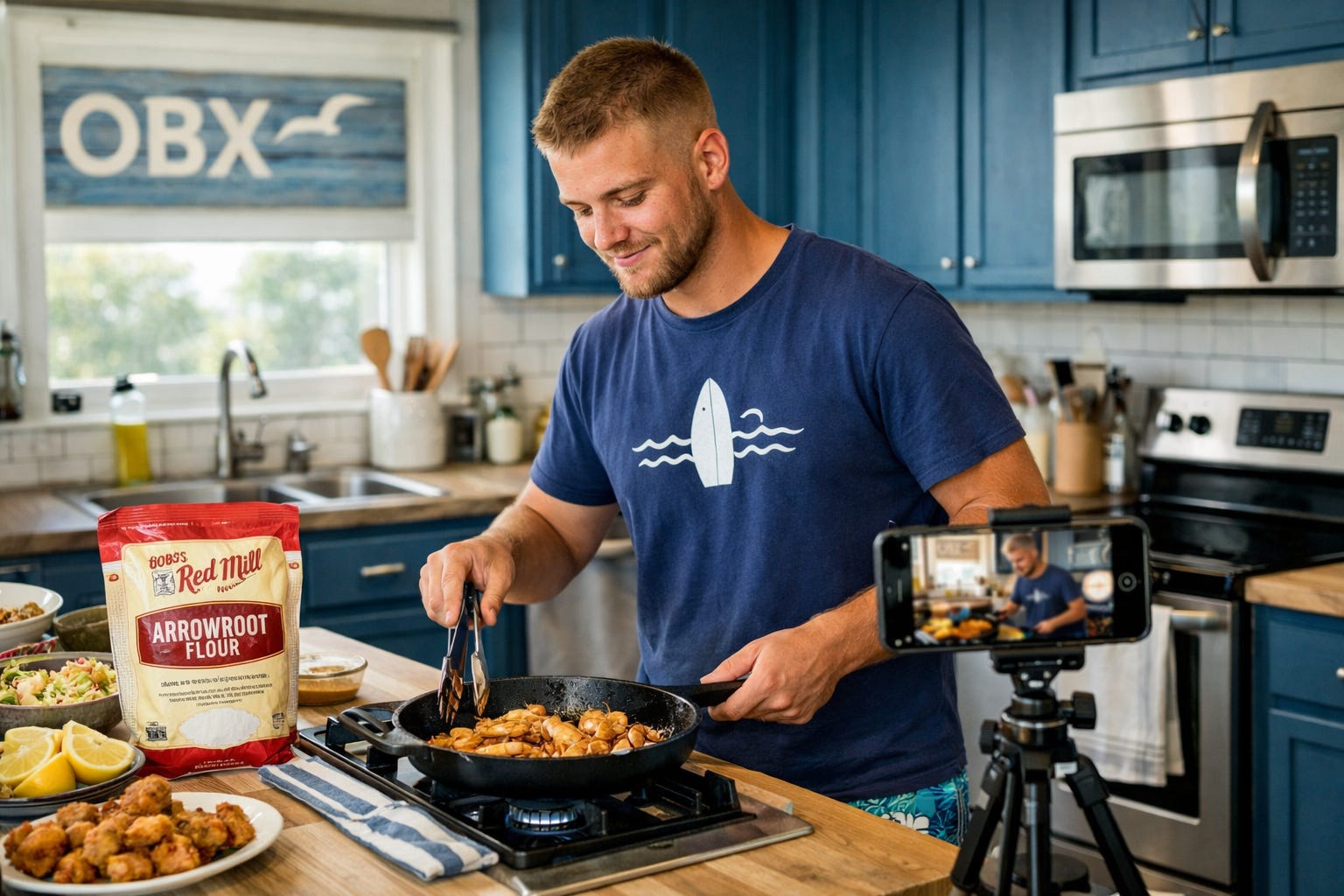
A few years ago, he was diagnosed with celiac disease, so he started doing what many creators do when life shifts: he began recreating the food he grew up eating. Gluten-free hushpuppies, crab cakes that still hold together, fried shrimp with a coating that actually crunches. Most people discovered him on TikTok at @OuterBanksGus, where he films the process of figuring those recipes out.
Recently, he also started a Substack called Crab Pots & Cornmeal, where he shares more of the behind-the-scenes thinking behind his recipes and the experiments that lead to them. Like many creators, Gus didn’t set out to build a content system. He just wanted his recipes to work everywhere his audience found him.
What Gus started doing differently
At first, Gus handled his content the way most creators do. Every recipe he created slowly turned into multiple versions of the same thing: a blog post, a TikTok caption, a newsletter explanation, and a handful of social posts. The information was the same each time, but the format kept changing, so he found himself rewriting the same ideas again and again.
Over time, he realized he needed to organize his content better. Each recipe lived as a single block of text that had to be reshaped every time it moved somewhere new.
So Gus tried something different. Instead of writing everything as one long story, he began organizing his recipes into clear parts before publishing them: ingredients, instructions, substitutions, cooking tips, and short explanations of why the recipe worked.
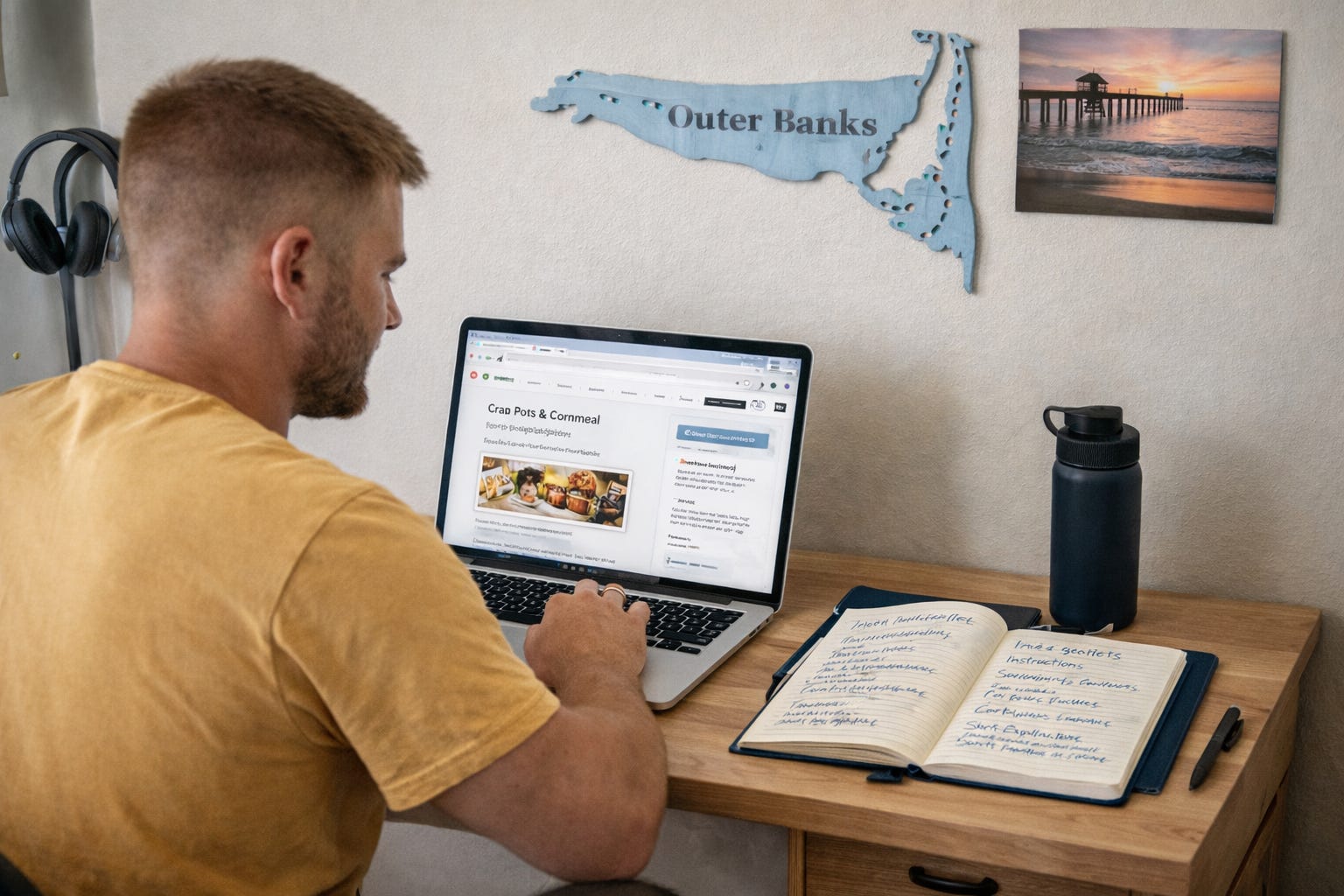
Once those pieces existed, the same recipe could show up in different places without being rewritten. The structured recipe powered his website, a short tip became a TikTok clip, the story behind the dish became a Substack post, and a substitution tip turned into a social caption.
Nothing about the recipe itself changed. What changed was how the content was organized.
Instead of rewriting the same information over and over, Gus started assembling it from pieces that already existed.
That shift is the difference between publishing content and building a content library. When your content is organized for reuse, every new piece you create becomes something you can use again later.
Why this matters right now
Food creators are already seeing this shift. Recipe platforms ingest structured recipes, search engines pull structured fields into results, and apps are building new cooking experiences using creator content. Often, creators don’t even realize their content is being interpreted this way because it happens behind the scenes.
Structured content already shapes how recipes move across platforms, but creators should understand how that system works. Because once you understand it, you stop rewriting your content.
If you want help thinking through your content system
Many of the strategy calls I have with creators start with the same realization: they’ve built a lot of content, but the system underneath it wasn’t designed for reuse. If you want help thinking through how your recipes, platforms, and audience could work together instead of feeling scattered, book a Food Tech Strategy Call. Sometimes one conversation is enough to see the system differently.
If you enjoy thinking about the systems behind food content, you can also explore more on the Blueberri blog, where I dive deeper into structured content, recipe platforms, and the future of food tech.
The internet is full of incredible recipes, stories, and ideas. But too often those ideas live as isolated posts instead of connected systems. When content is organized well, it doesn’t just get published once. It keeps working for you across platforms, formats, and audiences.
That’s the shift I’m exploring more deeply as I finish editing the book, and it’s something I’ll keep sharing here in Blueberri Pi as well. Once you start seeing how content systems work, you can’t unsee it.
And when you understand the system, you stop rewriting the internet.
Until next time.
Your friend in food,