
Raptive is moving beyond advertising.
If you’re a food blogger working with Raptive, you’ve probably heard something about Raptive Intelligence by now. Or maybe you haven’t.
I’ve been following the announcements and having conversations with people in food tech about what this could mean for recipe creators. It was news to me; maybe it’s news to you, too. I hear there’s interest in what’s being built, but also some uncertainty about how all the pieces fit together. And I can understand why.
We’re talking about AI assistants, recipe data, grocery shopping, content licensing, and new ways to monetize creator expertise. That’s a lot to unpack, especially when the technology is still emerging. So I wanted to take a closer look at what Raptive has actually announced, why it matters, and what questions I think creators should be asking. I’m writing this now, on Wednesday night, to go live tomorrow… outside of my usual schedule. I couldn’t help myself. So here’s a BONUS issue of Blueberri Pi.
I’m not giving an endorsement or a warning. Just a heads up on where the technology is heading and what that could mean for the people whose content makes it possible.

First, what exactly is Raptive Intelligence?
On June 9, 2026, Raptive announced a new business unit called Raptive Intelligence, alongside its acquisition of AlchemyAI, a food-intelligence technology company founded by John Roa, who now leads Raptive’s AI strategy.
If you know Raptive primarily as an advertising partner for publishers, this represents an interesting expansion. The company wants to make creator expertise and consumer intent useful across AI platforms, grocery retailers, consumer packaged goods companies, and other commerce experiences.
In other words, Raptive is looking at the value of food content beyond the advertisements displayed alongside it.
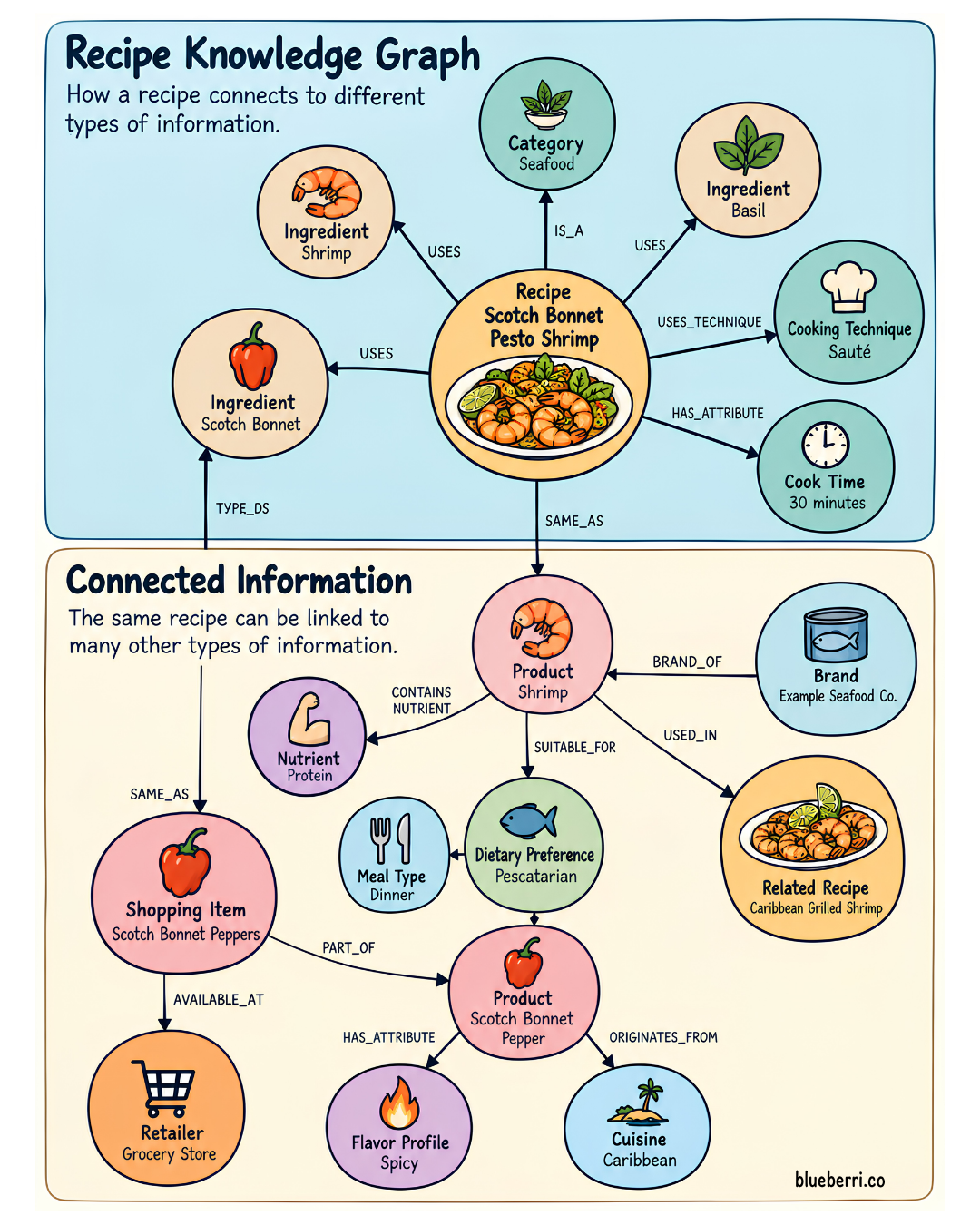
Think about a recipe. To a reader, it’s a set of ingredients and instructions for making dinner. To a technology platform, that same recipe can contain information about ingredients, dietary preferences, cooking techniques, substitutions, nutrition, and even potential shopping decisions.
Raptive says the technology it acquired from AlchemyAI includes a food knowledge graph that connects these different types of information. That’s interesting because it could allow recipe information to support experiences beyond the original blog post.
WAIT, WHAT’S A KNOWLEDGE GRAPH?
Think of it as a map of how information connects. A regular recipe database might store a recipe’s ingredients, instructions, and cooking time.
A knowledge graph connects those details to other things. For example, it can recognize that chickpeas are legumes, that they’re a source of plant-based protein, and that they appear in recipes suitable for certain dietary preferences. Those connections help technology answer more useful questions, recommend related content, and support experiences like meal planning or grocery shopping.
There are a few different products to keep straight
This is where things can get confusing. Raptive Intelligence is the broader business initiative announced in June. Its stated ambitions include licensed data access, real-time intelligence products, and commerce infrastructure.
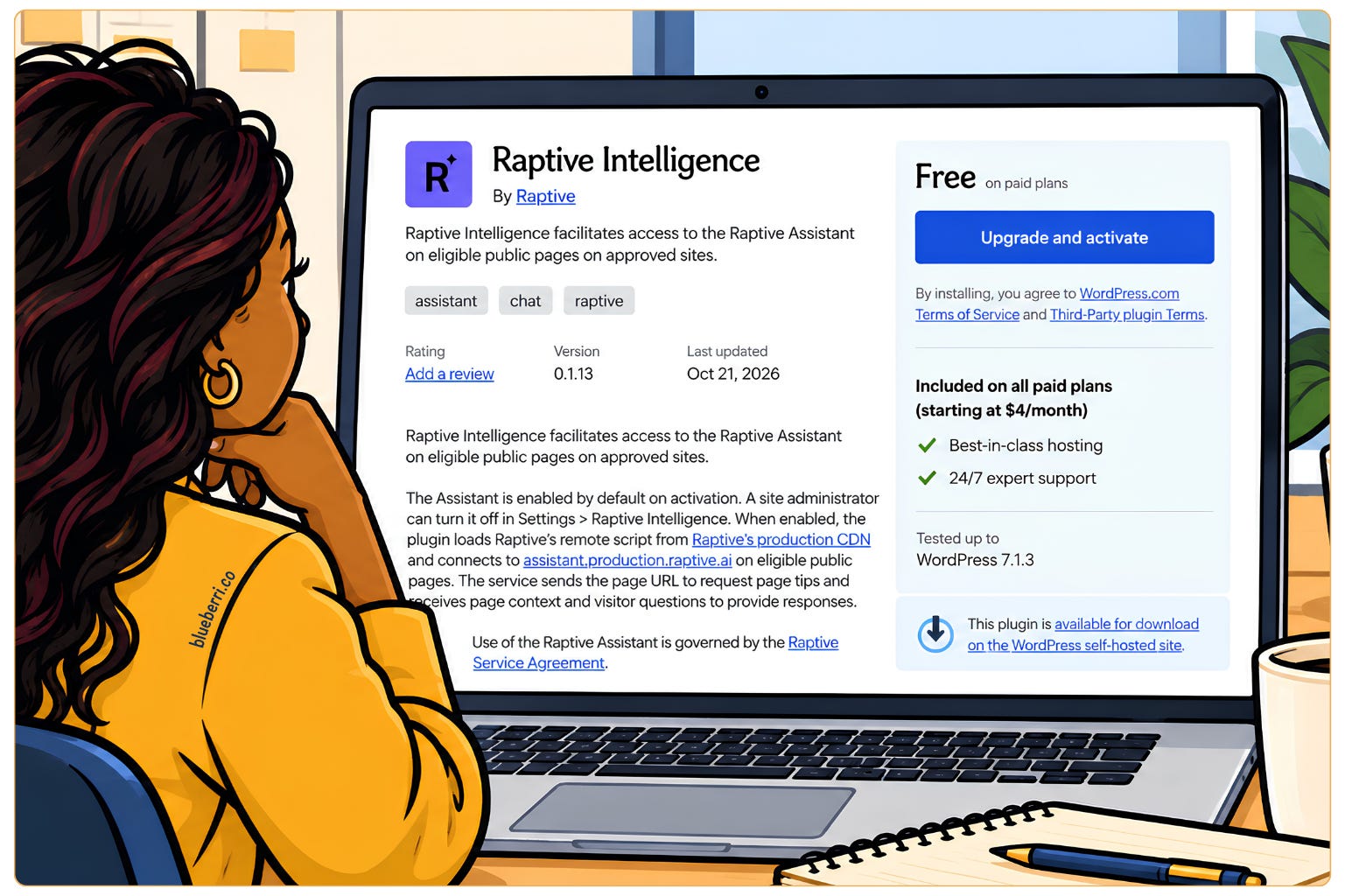
There’s also a Raptive Intelligence WordPress plugin. Its public listing, updated October 21, 2026 at the writing of this article, describes a Raptive Assistant that can appear on eligible pages of approved publisher websites. According to the listing, the assistant is enabled by default when the plugin is activated, although site administrators can turn it off under Settings > Raptive Intelligence. When enabled, the service sends the page URL and uses page context and visitor questions to generate responses.
Then there’s Raptive Compass, a separate publisher dashboard product that uses AI to help publishers interpret their performance data and identify next steps.
All three involve AI, but they don’t necessarily serve the same purpose. An assistant helping a reader understand a recipe is different from a tool analyzing publisher revenue. Both are different from infrastructure that could make food information available to outside commercial partners.
We have to pay attention to all three when we’re discussing what information is being used and who benefits from it.

Why food creators should care
Let’s say you’ve spent ten years building a recipe website. You’ve tested hundreds of dishes, documented techniques, answered reader questions, photographed ingredients, and developed an understanding of what your audience wants to cook.
Traditionally, much of the economic value came from bringing someone to your website. A person searches for a recipe, visits your page, sees advertising, and perhaps clicks an affiliate link or purchases something you recommend.
But what happens when the recipe can also help an AI assistant suggest a substitution? Or help a grocery platform build a shopping list? Or help a food brand understand what consumers are interested in making?
Suddenly, the potential uses of your content extend beyond your website. That isn’t automatically a bad thing.
In fact, it’s something I’ve been talking about for years: content can become more valuable when it’s structured well enough to work across different platforms and experiences.
The webpage doesn’t have to be the boundary of your content’s value.
The opportunity is that creators might be able to earn from uses of their expertise that traditional advertising never captured. The challenge is figuring out how those uses are authorized, measured, attributed, and compensated.
The opportunity is real, but the details matter too
Raptive has publicly stated that it wants creators to share in the value their work generates. It has also advocated for attribution, transparency, and creator rights as AI changes digital publishing.
Just typing out loud here, but there’s a difference between describing a business vision and explaining the terms under which an individual creator participates. For example, if a recipe helps power a shopping recommendation on another platform, what does participation look like? Does the creator receive attribution? Is the content licensed? Is compensation tied to usage, transactions, or some other arrangement?
And what happens when the information being used isn’t just the recipe itself, but also insights derived from how audiences interact with recipes? These are different categories of value, and they deserve different conversations.
I haven’t found enough publicly available detail to answer those questions for the new Raptive Intelligence business as a whole. That doesn’t mean the answers don’t exist or that anything improper is happening. It means creators should understand the applicable agreements and product terms before drawing conclusions about what they’re joining.

What about the data?
This is the part I’m really interested in as a content systems strategist. Recipe content, audience behavior, and commercial intelligence aren’t interchangeable. A recipe might contain ingredients, instructions, cooking times, and nutritional information. Audience interaction data might reveal which recipes readers view, what questions they ask, or which substitutions interest them. Commercial intelligence might involve analyzing patterns across many interactions to understand broader consumer preferences. Each can be useful, but also raises different questions about access, permissions, and ownership.
The public WordPress plugin description, for instance, explains that the assistant sends the page URL and uses page context and visitor questions to provide responses. A useful starting point for understanding the assistant, but it doesn’t explain every data practice associated with the broader Raptive Intelligence initiative. And I wouldn’t assume the same permissions or commercial arrangements apply to every Raptive product simply because they share a company name.
For creators, here are some questions to think about and maybe jot down for later!
What information does this particular product collect and use?
Can that information be shared with outside partners, and for what purposes?
How are creators credited and compensated when their content creates value elsewhere?
Is participation optional, and what happens to the information if a creator stops participating?
What rights and controls are established in the applicable agreements?
These aren’t questions unique to Raptive. I’d ask them of any company developing AI-powered services around creator content.
There’s a bigger change happening
Food content has always been valuable to more than the person reading a recipe. It influences what people cook, what they purchase, which products they trust, and which brands become part of their routines. What’s changing is the technology available to identify, connect, and act on that information.
A well-structured recipe can become part of a larger system connecting food discovery, meal planning, shopping, and commerce. That’s why metadata, taxonomy, content relationships, and rights management matter. It’s why I’ve been paying attention to companies working on recipe intelligence, whether they’re building tools for individual creators, consumer cooking experiences, or infrastructure for larger platforms.
The technology is becoming capable of doing more with content that already exists, but the ability to use content isn’t the same thing as having the right to use it, and creating value isn’t the same thing as distributing that value fairly. Those are business and relationship decisions, not just technical ones.
So what should creators do now?
I wouldn’t rush to adopt something simply because it uses AI. I also wouldn’t dismiss an emerging product before understanding what it actually offers, and just becuase it does use AI. If you’re a Raptive publisher, start by asking which services are available to you today, which are still being developed, and what participation requires.
Read the relevant terms. Ask how your content and audience information will be used. Understand whether there are new revenue opportunities and what would qualify you to participate. If you’re building a recipe platform or another food-tech product, pay attention to the underlying shift.
The value isn’t necessarily in generating another recipe or adding a chatbot to a webpage. It may be in helping trusted, existing content work across more useful experiences while preserving the relationships and rights that made that content valuable in the first place. A much more interesting challenge, if you ask me.
My initial thoughts are…
I see potential in what Raptive Intelligence is describing, especially if it creates meaningful new opportunities for food creators to benefit from the expertise they’ve already built. I also think it’s too early to evaluate the broader initiative solely on its ambitions. The details of implementation, permissions, attribution, and compensation will matter. I also don’t think Raptive will be the only company showing up to this party. More creator-focused AI tools are likely coming, and that’s why it’s worth shopping around. It’s a little like choosing a phone plan. Unlimited data sounds great, but I still want to read the fine print before signing up.
Content isn’t an asset until it’s structured.
Structure is only part of the equation. When that content begins moving between systems, the relationships and agreements around it have to be just as intentional. The next question for food creators isn’t just where their recipes can go, it’s what happens to their value when they get there.
Are you a food creator following Raptive Intelligence? I’d love to know what you’ve heard, what you’re excited about, and what questions you still have.
Leave a comment or reply to this email.

JUST SO WE’RE SUPER CLEAR: Blueberri Pi is independently published by Sandie Markle, founder of Blueberri. This article is an independent analysis of publicly available information, not a sponsored post or endorsement of any company.