Tech companies that have content-first platforms need creators. You know it, I know it, they know it. The part that I want to talk about is what happens after everyone agrees on that sentence.
I spent five years growing a list of food bloggers purely off the cold email. I didn’t know how to create a funnel, I had no outreach tool, just me, refining the approach over time until I got pretty good at it. Relationships built one email at a time, one blogger at a time, one “let me tell you what we’re building and why it might be worth your time” at a time.
Then things changed with syndication.
I remember the first time I heard the word cannibalize. A blogger said it to me directly. “Why would I put myself on this platform? It will cannibalize my content.” I didn’t have a salesy-biz-dev answer for her in that moment, and, I’m not sure it’s what the moment needed. What it needed was for someone at the company to have already thought that question through before it landed in my inbox. To be on top of the changes that were happening with content and how it affected the people were were trying to reach.
I’ve spent time on both sides of this. I’ve worked with and grown a creator list from nothing. I also launched a full content partnerships program from the ground up. It didn’t take off because it stopped being a priority for the company at a moment when priorities shifted elsewhere. One of many things that I’m legit sad about. It happens. But I’ve kept the notes from that experience, and if I were building my own creator program tomorrow, I’d start with what I watched go wrong, over and over, at company after company.
These are my observations for tech companies and creators to learn from, so take from it what’s useful to you. I’ve built my framework, COSE™ around this. In COSE terms, this lives in the Expand for Reach and Revenue stage, the part of the framework about reach, revenue, and partnerships. You can have the best structured content system and still fumble the human relationships that are supposed to expand its reach. Here’s where I keep seeing that happen.

1. They don’t understand the community
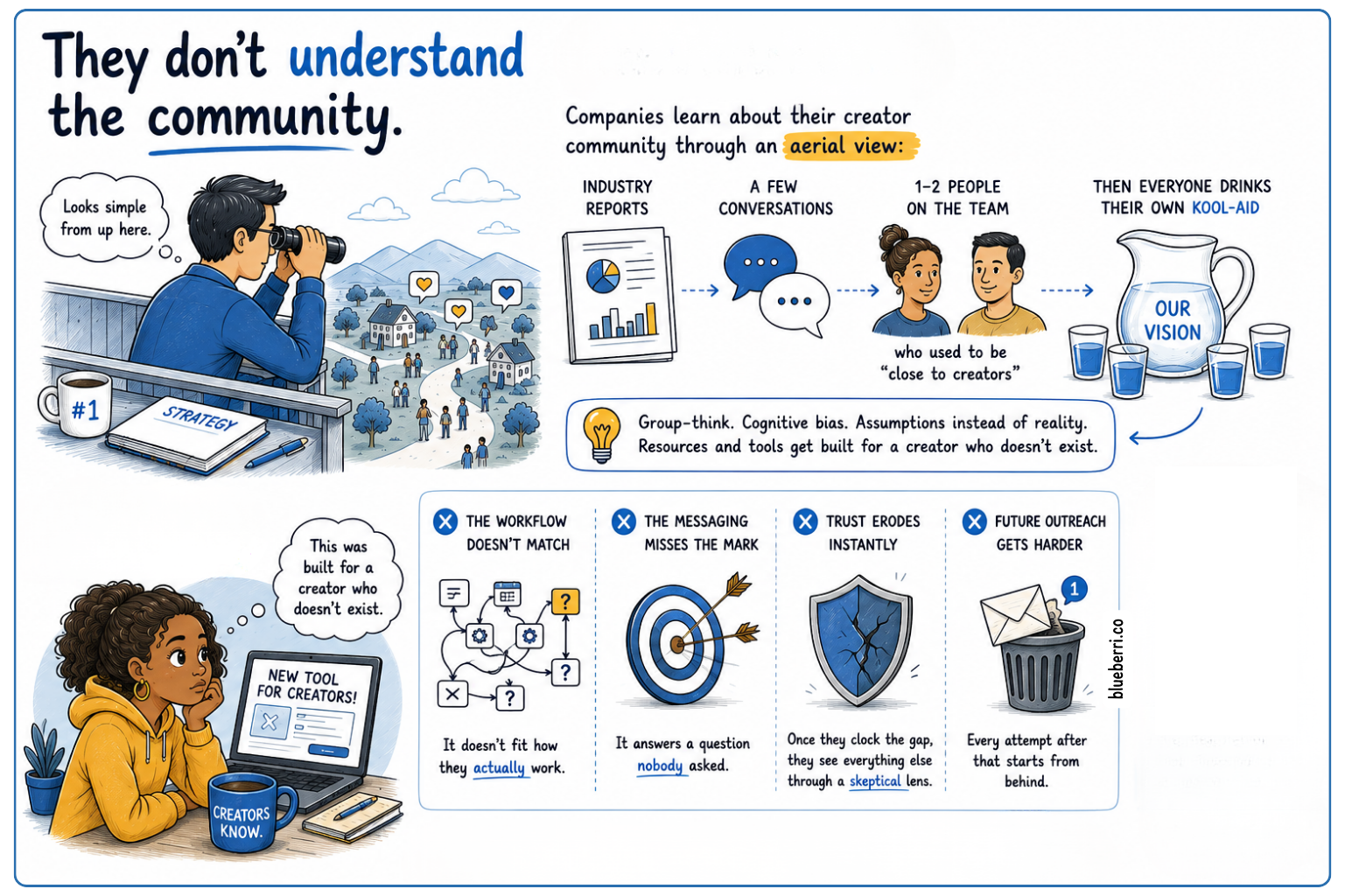
Most of the time, this isn’t malicious. It’s just distance. Companies learn about their creator community through an aerial view that’s an industry report, a few conversations, the experiences of one or two people on the team who used to be “close to creators” at some point in their career. Then everyone drinks their own Kool-Aid in the form of group-think accolades, cognitive bias, and resources and tools get built based on assumptions and generalizations instead of what creators are actually doing day to day.
Here’s why this backfires. Creators can tell, almost instantly, when a tool or resource was built for a creator who doesn’t exist. The workflow doesn’t match how they actually work. The messaging answers a question nobody asked. And once a creator clocks that gap once, they start reading everything else from that company through a more skeptical lens, which makes every future attempt at outreach harder than the last.
2. Really, really bad messaging and benefit package for joining
My biggest cringe moments come when messaging doesn’t just fall flat, it burns to the ground. Words matter.
Sometimes tech founders and execs think they are the voice of the brand. I’ve watched a founder who is great at building the product get handed the mic for creator outreach, because it’s their company, and surely nobody understands it better than they do. Except understanding the product and understanding the room are two different skills, and I’ve read outreach emails that sound like they were lifted straight out of a board deck. The language is inward-facing. It’s built around what the company needs the creator to believe, not around what the creator is actually trying to figure out, which is usually some version of “is this worth thirty minutes of my time.”

Companies sometimes expect creators to come flocking to promote a product or service that hasn’t even entered the five stages of adoption yet. It’s still hovering at the very top of the awareness marketing funnel. Nobody knows about it, so nobody cares. And because of problem #1, the messaging is blatantly obvious about who it’s really for. The selling proposition helps the company. It doesn’t help the creator. Creators notice the difference between “here’s what this does for you” and “here’s what we need from you,” even when the words are dressed up nicely.
3. The wrong person is talking to creators
I’ve worked with and met some of the most intelligent product managers and engineers you’ll ever come across. Genuinely brilliant at what they do. But sometimes the tech speak is a bit much for the room they’re standing in.
A few years ago, I went to a creator workshop led by a tech guy. He was talking about the benefits of a product I thought was fascinating. I was locked in, picking up everything he was putting down, because I spoke his language. I’d learned it over time. But as I looked around the room, I could see he’d lost his audience. By the end of the session, about 75% of the room had quietly left.
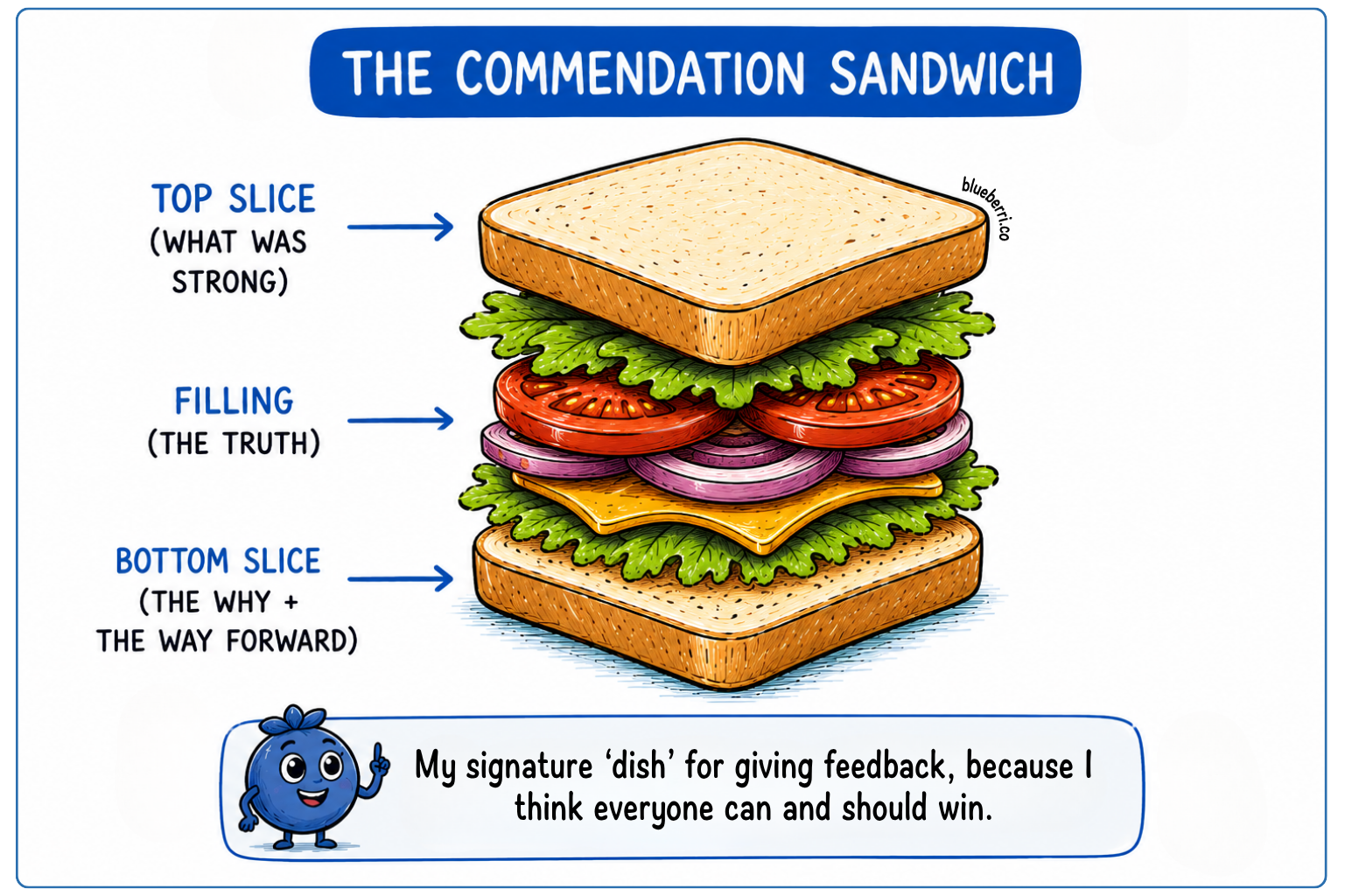
He tried. He really did. I thanked him afterward and told him what I appreciated about the session, then told him the part he probably was supprised to hear. I gave him it in a commendation sandwich, my signature dish. It was filled with “I’m not his audience…creators are” and he lost them. He was gracious about the feedback. I want him to succeed. I want creators to succeed too. Those were the slices of bread that made up the sandwich. I still think about that room, half empty by the end, and what it means that the smartest person in the building wasn’t the right person to be standing at the front of it.
4. Wrong use of visibility
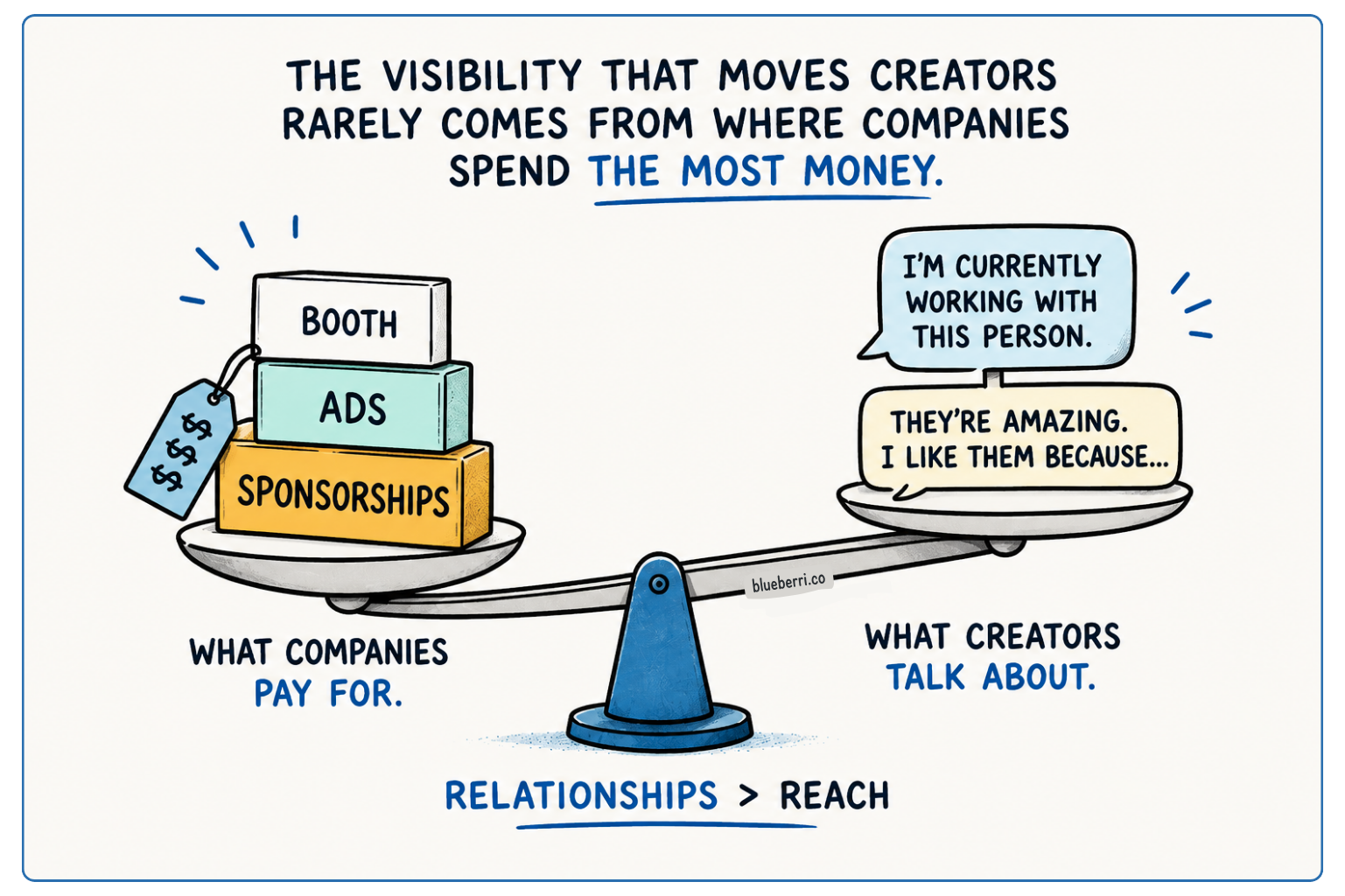
There's a version of this problem that shows up as a line item in a budget. Spending money on a booth, on ads, on sponsorships, isn’t the only way for people to know who you are.
Before I started Blueberri, my name was already synonymous with the company I worked with, even when that didn't always translate directly into business for them. That's usually how it works in the early stage of a company, especially in tech. It's rare for a creator to turn to another creator and say, "Have you heard of this business, they're great." What actually happens is closer to, "I'm currently working with this person. They're amazing. I like them because..." The visibility that actually moves creators rarely comes from the places companies spend the most money trying to buy it.
5. Not thinking of creators as strategic partners
This one is closely related to numbers one and two, and it affects both of them. If you don’t see creators as potential strategic partners in what you’re building, that shows up in how you speak to them and what you offer them.
I get it, it’s a business. Creators are your target customer. But it’s worth sitting with the fact that this isn’t just a B2B model. It’s B2B2C, and especially in the early years, companies could use some of the feedback and guidance that doesn’t happen during sprint planning or a board meeting. Creators can be customers and advisors and early adopters and brand ambassadors, sometimes all at once, and most companies I’ve watched only ever engage them as the first one.
A Note to Creators: You have to see yourself as a strategic partner too. Positioning yourself as such will bring more of these opportunities to you.
Where this leaves us
Expand for Reach and Revenue, in COSE, is the stage where structure is supposed to turn into reach, revenue, and new experiences. Partnerships live right in the middle of that. But partnership only works when both sides are actually building something together, not when one side is hoping the other shows up to promote a product that hasn’t earned its awareness yet.
Next up, I want to share what I'd actually do differently if I were building a creator program from scratch, using everything I've learned from the list I built, the program that didn't get the runway it deserved, and the years since spent watching other companies make the same five mistakes in slightly different outfits.
There’s even a freebie in it for ya.
Help me get my book into your hands
Create Once, Share Everywhere™ has been taking shape for a long time. On July 20, 2027, it becomes a real book.
I've chosen to independently publish it because I want to build something that reflects the ideas I'm asking creators to believe in → ownership, longevity, and creating work that can keep growing beyond the place it started.
And I'd love for Blueberri Pi readers to be part of bringing it into the world.
Through December 31, annual Blueberri Pi subscriptions will help fund the professional production of Create Once, Share Everywhere™.
Upgrade to an annual subscription for $80 and you'll get a full year of paid Blueberri Pi. And when the book publishes next July, I'll send you a complimentary copy.
So you're not just supporting a book. You're supporting the independent thinking I publish here, the work I'm building around COSE™, and a bigger idea I've come to believe deeply that good work deserves the structure to last.
[BECOME AN ANNUAL SUBSCRIBER + GET THE BOOK]
Until next time,