

I’ve never believed influence was just a numbers game.
I’ve worked on campaigns with creators who had enormous audiences. On paper, everything looked right because they had a large following, plenty of potential reach, and impressive projected impressions. The creator posted and the campaign delivered what it promised. Hundreds of thousands, sometimes millions, of people had the opportunity to see the content.
And then…not much happened.
Meanwhile, I’ve watched much smaller creators generate real conversations. Their audiences asked questions. People trusted their recommendations. They clicked, saved, and came back. The creator knew the subject well enough to explain the detail everyone else glossed over. Their content remained useful long after the campaign report was finished. Influencer marketing has always had a measurement problem hiding underneath its reach problem.
Reach is easy to understand. It fits neatly into a spreadsheet. Ten thousand followers is smaller than one hundred thousand, and one hundred thousand is smaller than one million. When a brand needs distribution, those numbers matters, but distribution and influence have never been exactly the same thing.
Now, as the way people discover information changes, that gap may become impossible to ignore. For the first time, nano and micro creators may have another way to compete. Not by becoming bigger, but by making their expertise easier to find, understand, trust, and use. I’m a fan and chearleader of the nanos and the micros, and this is the moment I've been waiting for.
More money means more pressure to prove influence
There’s more money riding on creator selection than there used to be. The Interactive Advertising Bureau reported that U.S. creator advertising reached $37 billion in 2025 and is projected to reach $44 billion in 2026. Nearly half of creator-ad buyers—48%—now consider creators a “must buy,” placing creator advertising just behind paid search and social media.
We’re not looking at a side channel anymore. Creator marketing is becoming part of the core media mix. With more money comes more pressure to prove what creators contribute. According to the same IAB research, 40% of buyers rank overall ROI as their top KPI for creator campaigns. When brands choose creators, 58% cite creator reputation and 56% cite audience alignment as important criteria. Follower-count metrics have turned into relevance metrics.
More followers used to mean more potential reach. More potential reach generally justified a higher price. We have become more sophisticated since the earliest days of influencer marketing. Engagement, conversions, demographics, content quality, and brand fit all matter, but audience size still has enormous gravitational pull. It gives us our categories: nano, micro, mid-tier, macro, mega. The issue begins when those categories become a proxy for value itself. A follower count can tell me something about how many people a creator might reach. It can’t tell me everything that creator knows.

Nano and micro creators have been giving us clues for years
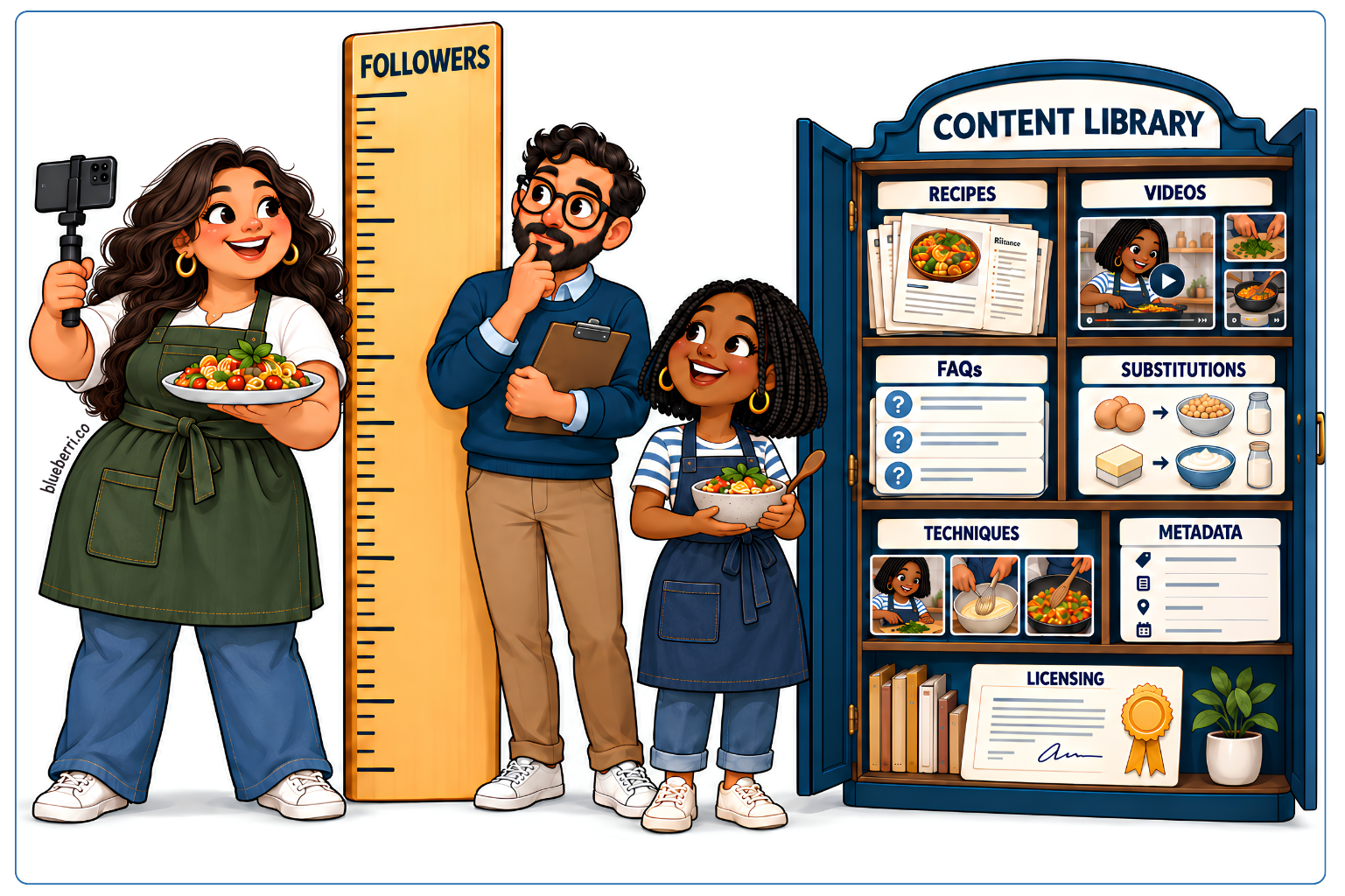
Engagement data has been hinting at this disconnect for a while. HypeAuditor’s State of Influencer Marketing 2025 found that nano creators—accounts with 1,000 to 10,000 followers—made up 76% of Instagram influencers and had the highest engagement rate among the tiers it analyzed, at 2.19%. That doesn’t mean a creator with 8,000 followers is automatically more effective than someone with two million. It would be just as lazy to replace “bigger is better” with “smaller is better.” It tells us that audience size and audience response are not the same measurement.
Imagine a creator with 8,000 followers who has spent seven years answering questions about gluten-free baking. She knows which flour substitutions work, which fail, and why. She has 250 tested recipes, substitution notes, FAQs, reader comments, technique videos, and years of firsthand experience around a specific subject. Put her beside a general lifestyle creator with 1.2 million followers.
Who has more reach? Easy. Who has more influence over someone trying to understand why their gluten-free bread keeps collapsing? That question is harder. Now ask one more question: Whose content can do more?
There are two kinds of reach now
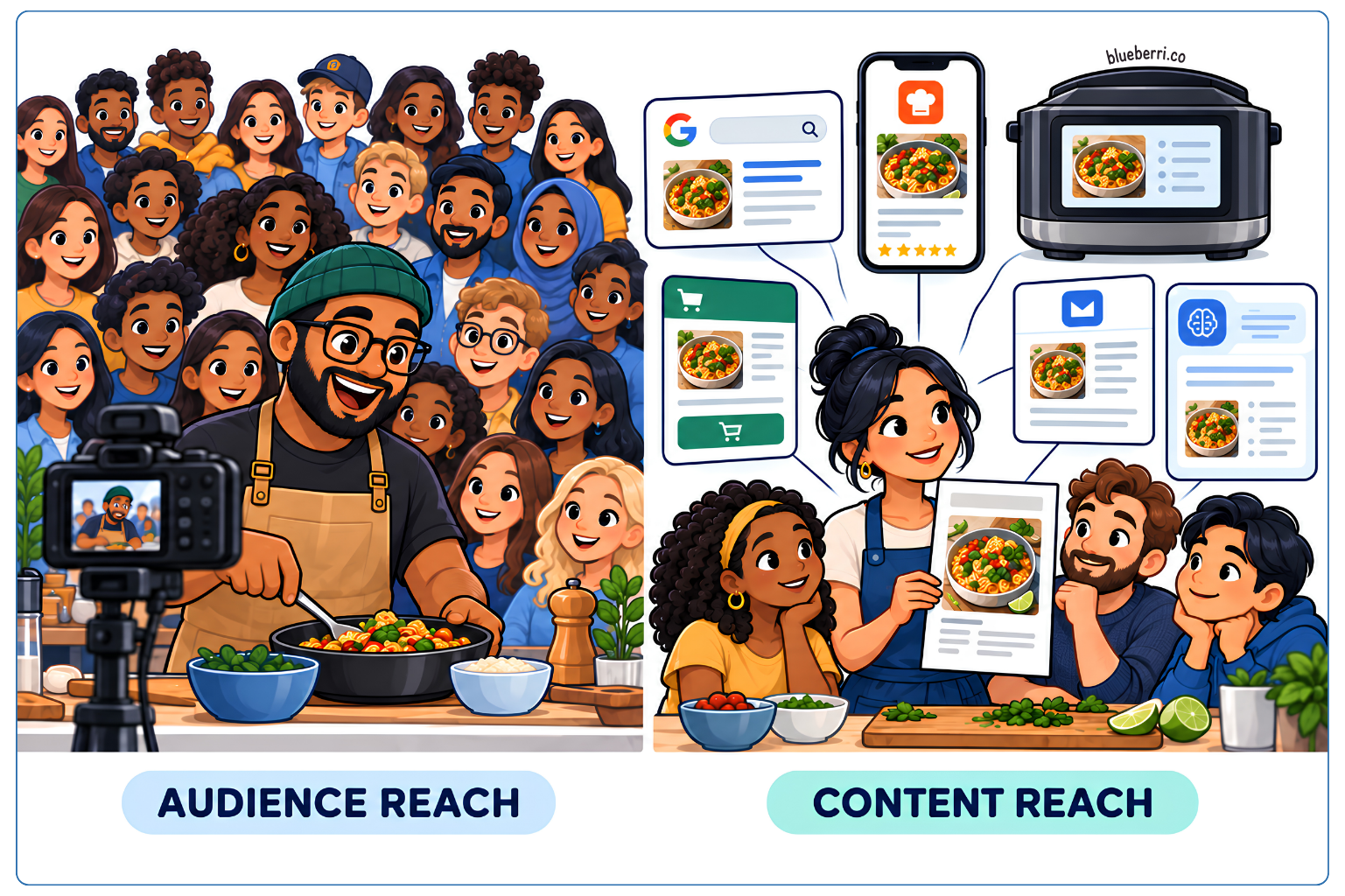
I think we need to separate audience reach from content reach.
Audience reach is the version we already understand. The creator publishes something and their audience sees it. The value is tied largely to distribution.
Content reach is about how many places the creator’s work can create value.
A recipe might begin on a blog, but it can also surface in traditional search or an AI-powered search experience. It could be licensed to a cooking app, incorporated into a retailer experience, used by a connected appliance, adapted for a brand program, included in a database, linked from a newsletter, or become part of a partnership that did not exist when the recipe was first published. The creator doesn’t need to carry all 8,000 followers into every one of those experiences. Content reach means the content, expertise, the ingredients, techniques, photos, substitutions, instructions, and point of view all go too.
If discovery systems continue to evaluate individual pieces of information according to how relevant and useful they are to a question, the size of the social audience attached to the creator becomes only one part of the story. For nano and micro creators, that could be a very big deal.