

Last week, I talked about how systems are increasingly shaping what gets discovered before people ever see it. Search engines are still part of that conversation, but now there are recommendation systems, AI assistants, automated summaries, shopping integrations, and platform algorithms all sitting between creators and audiences. More and more, content is being interpreted before it’s being experienced. That shift is changing what content problems actually look like.
A lot of creators and content teams still think they’re dealing with visibility problems, quality problems, or consistency problems. Sometimes they are. But as time goes on, what they’re really dealing with are interpretation problems and operational problems that are much harder to recognize. The frustrating part is that these issues rarely look structural at first, which is why so many people keep trying to solve them by producing more content instead of looking at the systems underneath the work itself.
Meet Daniel
Daniel lives in Tampa, Florida, where most mornings start the same way. Coffee on the counter. Laptop open before the sun fully settles over the water. Slack notifications already waiting for him before he’s even had breakfast. A few years ago, he was a marketing major trying to figure out how to combine his interest in branding, wellness, and digital storytelling into something that actually felt meaningful. That eventually became Pulse & Pine, a wellness brand focused on functional drinks, supplements, and educational content on everyday health routines.

At first, the business felt simple. Daniel handled the Instagram account himself, wrote the emails late at night, filmed short videos for TikTok, and answered customer DMs between packing orders. The content felt personal because it was personal. Every caption, campaign, and product page lived inside his head, which meant the business could move quickly without needing much structure. But as the company grew, so did the complexity surrounding the content.
Now Daniel is the content team, even though technically there are other people involved. There’s a freelance designer helping with social graphics, a contract copywriter handling newsletters twice a month, a part-time operations assistant scheduling content, and an agency supporting paid campaigns. Everyone contributes something to the workflow, but Daniel still acts as the central connection point between all of it. Every approval, update, clarification, and messaging adjustment eventually flows back through him.
By Tuesday morning, he already has multiple Slack threads open with people asking questions about approvals, messaging, timelines, and which version of the copy is actually the latest one. One person is updating the website while another is scheduling the newsletter, and social media is still using older messaging because nobody realized the positioning changed during yesterday’s meeting. A product launch graphic is using outdated language from two weeks ago because the latest revisions were buried in comments inside a Google Doc nobody reopened. Everyone on the team is smart, capable, and working hard, but the workflow itself keeps creating confusion.
Nothing inside Pulse & Pine looks broken from the outside. Campaigns still go out, gets published, and meetings still happen. But underneath all of that, it’s still pretty messy because the operational system supporting the content was never designed to handle the level of coordination modern content requires. After a while, Daniel starts treating constant clarification as a normal part of the job instead of recognizing it as a sign that the system itself is struggling to keep up.
Why this is becoming more common
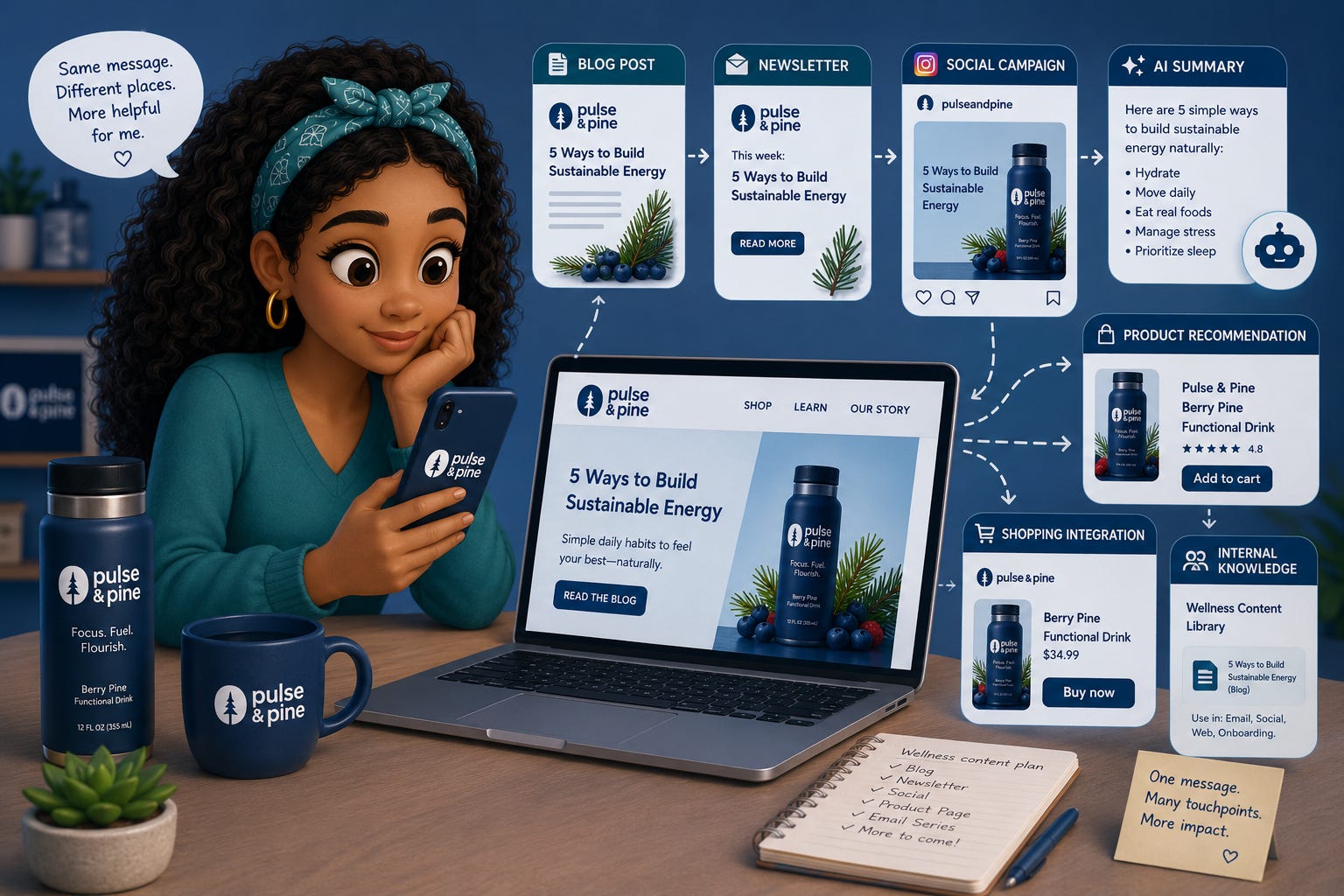
One of the biggest changes happening right now is that content no longer lives in one place or moves in one direction. A blog post might also become a newsletter, a social campaign, an AI summary, a product recommendation, a shopping integration, or part of an internal knowledge system. The problem is that many workflows still operate as if content only has a single destination. That disconnect creates operational stress that most teams feel long before they fully understand what’s causing it.
What makes this difficult is that operational complexity rarely announces itself clearly. Most people experience it as duplicated work, endless revisions, unclear ownership, inconsistent messaging, or the feeling that everything somehow takes longer than it should. When that pressure builds, the instinct is usually to publish more, move faster, add another platform, or introduce another tool into the workflow. But scaling output does not fix systems that were never designed to scale in the first place.
Structure is becoming something much bigger
Before we get into what “Create with Structure” looks like in practice in the COSE™ framework, I think it’s important to pause on why this matters beyond formatting or workflow optimization. A lot of creators and teams are trying to improve outputs without realizing the environment around content has fundamentally changed. If we skip that part, structure can start sounding like just another publishing tactic instead of what it’s increasingly becoming: operational infrastructure for modern content systems.
This is why I keep coming back to structure, even though I think the conversation around it is starting to outgrow SEO and formatting entirely. Structure is increasingly about helping people, systems, and platforms interpret the same information consistently as content moves across different environments. Without that understanding, every platform, team member, and workflow has to reconnect meaning manually every single time content changes. That hidden coordination work is becoming one of the biggest sources of friction in modern content operations.
I also think this explains why so many content professionals feel exhausted right now, even when they’re incredibly good at what they do. A lot of people entered content work expecting to focus on storytelling, publishing, creative campaigns, or audience growth. Instead, many now find themselves navigating workflows, governance decisions, platform limitations, AI tools, and cross-functional coordination challenges they were never really trained to manage. The work evolved faster than the language around it did.
The role itself is changing
There’s a strange identity shift happening across content work right now that I don’t think we talk about enough. Teams are still using old titles and old expectations to describe work that has become much more operational and systems-oriented underneath the surface. Creators are expected to think strategically, strategists are expected to understand platforms and workflows, and content teams are increasingly managing infrastructure whether they realize it or not. A lot of people are carrying systems-level responsibility inside roles that were originally built around publishing.
The creators and teams that stand out right now are the ones building systems where content can stay understandable, adaptable, and reusable as platforms continue changing around them. They understand that visibility is no longer just about publishing constantly but making sure content can move clearly between systems, audiences, and environments without losing meaning along the way.
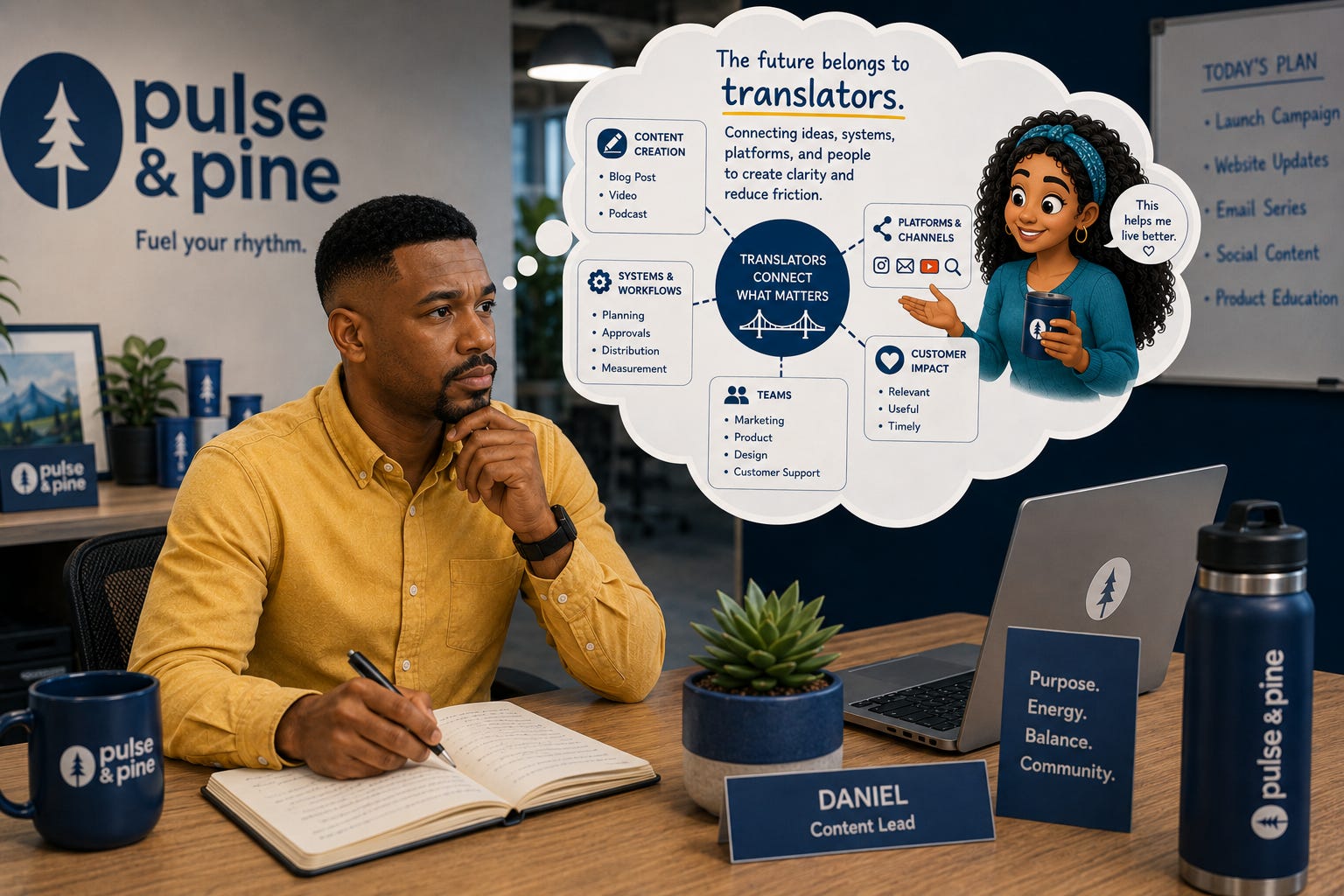
The future may belong to translators
I keep thinking that the future of content work may belong to translators more than specialists. Not translators in the language sense, but people who can connect creative thinking, operational systems, platforms, and human understanding in ways that reduce friction instead of adding more of it. The teams that adapt well will probably be the ones capable of building shared understanding across departments, workflows, and technologies without creating confusion every time something changes. That kind of clarity is becoming increasingly valuable.
Content is no longer operating inside one format, one channel, or one destination. The systems surrounding content now shape how it gets interpreted, distributed, reused, and surfaced long before audiences ever engage with it directly. The people who thrive in this environment will not simply be the fastest publishers. They’ll be the people who understand how content, systems, platforms, and communication all connect beneath the surface.
Join the early reader group for Create Once, Share Everywhere™
One of the hardest parts of writing this book has been making sure the ideas connect clearly across creators, teams, workflows, and systems without making the conversation feel overly technical. I want the book to feel useful for people actively navigating modern content work, not just theoretically interesting. That’s why I’m opening up an early reader group before the manuscript is finalized.
If you join the group, you’ll get early access to the manuscript before publication along with a short feedback survey. I’m not looking for polished reviews or praise. I want honest reactions about what feels helpful, what feels unclear, and what ideas genuinely shift the way you think about content systems and workflows. The goal is to make sure the book actually helps people navigate the complexity modern content work now requires. Sign up here.
Paid subscriptions are coming June 1
Starting June 1, Blueberri Pi will introduce a paid subscription tier for readers who want to go deeper into the operational, strategic, and systems-thinking side of modern content work. The free edition will continue, but paid subscribers will get additional essays, behind-the-scenes framework breakdowns, practical system maps, workflow analyses, and deeper dives into frameworks that relate to structured content. I also plan to share more of the thinking, observations, and industry patterns that don’t always fit cleanly into the public Friday editions.
Paid subscriptions will launch at $8/month or $80/year. Founding subscribers will also receive early access to selected book materials, future workshops, and subscriber-only discussions around content systems, operational clarity, and the future of content work. If Blueberri Pi has helped you think differently about content, platforms, workflows, or visibility, upgrading will help support the research, writing, and long-form work I’m building this publication around.
If we haven’t met, I’m Sandie.
Blueberri Pi is a systems-aware publication about content, platforms, operational clarity, and the people navigating the future of content work.
See you next Friday.

There there is freedom in structure! I’m a firm believer in that