It’s been a little quiet over here.
Not because nothing was happening—but because a lot was.
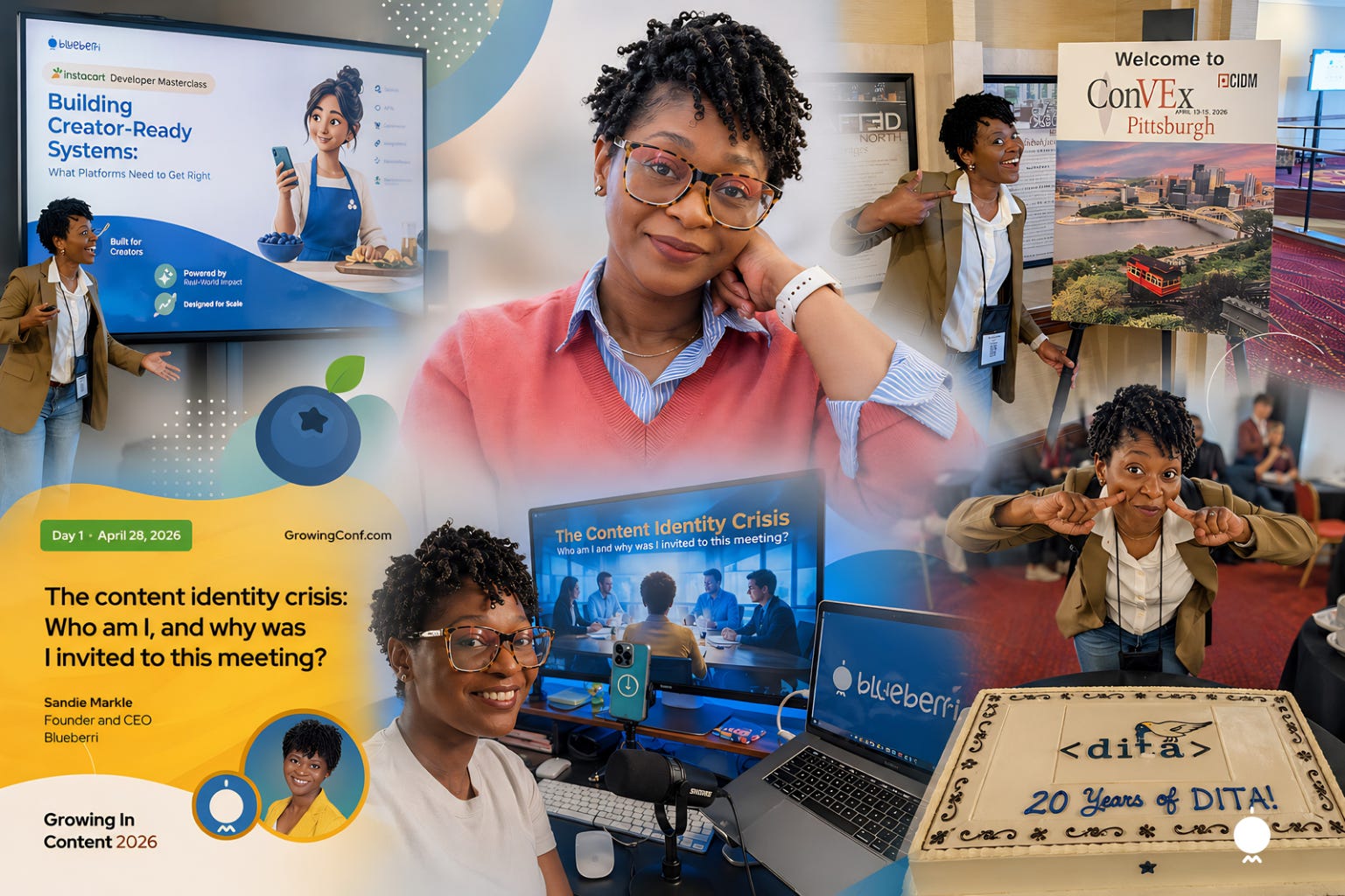
April pulled me out of writing mode and into rooms, conversations, and stages where I got to hear, in real time, what creators and content teams are actually dealing with right now.
I spoke at ConVex in Pittsburgh, led an Instacart Developer Masterclass, presented at Growing in Content, and went live on Substack with Yvette Marquez-Sharpnack, award-winning Mexican-American cookbook author, founder of Muy Bueno, and author of Cocina to Career. (Subscribe if you haven’t already!)
Even though they were different audiences and different formats, the same conversations kept coming up.
Creators are working harder than ever.
And still asking: why isn’t this working?
That’s the part I can’t ignore, because at the same time all of this is happening… the ground is shifting under the way content gets discovered.
A quick reality check
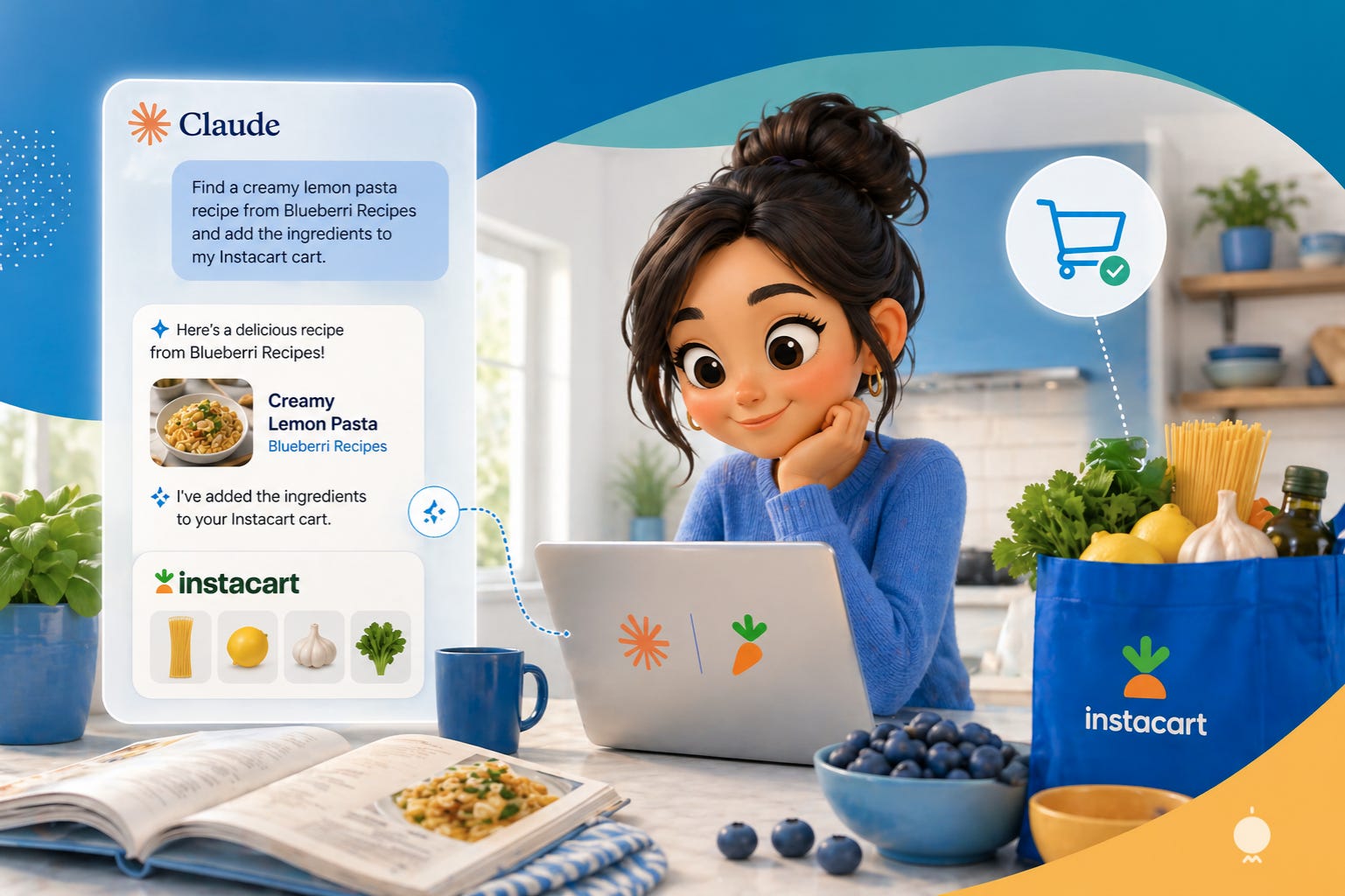
Instacart is now available inside Claude.
And it’s been integrated into ChatGPT since December. Which means something pretty simple, but easy to underestimate:
Home cooks aren’t just searching anymore. They’re asking.
They’re asking tools to:
Find recipes
Adapt recipes
Build grocery lists
Walk them through cooking
And those tools are pulling from structured, machine-readable content to do it.
So now your recipe doesn’t just need to rank on Google.
It needs to be understood by systems that:
Don’t “see” your blog the way a human does
Don’t scroll
Don’t guess
They rely on structure.
Why this matters (more than you think)
If your content isn’t clearly structured:
Ingredients get missed
Steps get flattened
Context gets lost
And your recipe becomes harder to surface, adapt, or recommend because it’s not legible to the systems now shaping discovery.
This is what I kept hearing and speaking about, over and over again in April, just from different angles.
Creators are talking about traffic drops and inconsistent RPMs from ad revenue. Teams are talking about distribution challenges. Platforms are talking about integrations, but the same underlying issue persists.
Content is being created for people…
but not for the systems that now sit between you and your audience.

This is where COSE™ comes in
If you’re new here, a quick orientation.
COSE™ stands for Create Once, Share Everywhere.
But more importantly, it’s a framework—not a tactic.
It’s a way to think about your content as something that:
Starts with structure
Can be reused without starting over
Works across platforms (not just your blog)
And actually connects to revenue
Most creators are stuck in a loop of:
create → publish → repeat
COSE™ breaks that loop.
It helps you:
Make your content easier to understand (by both people and platforms)
Easier to reuse (without rewriting everything)
Easier to distribute across places like search, apps, and now AI-driven tools
Because the goal isn’t to create more content.
It’s to make the content you already create go further.
If you want a deeper breakdown, start with this guide to the COSE™ framework.
Over the next few issues, I’ll walk through how this actually works in practice. I want to give creators a better way to make their existing ideas work in more places.
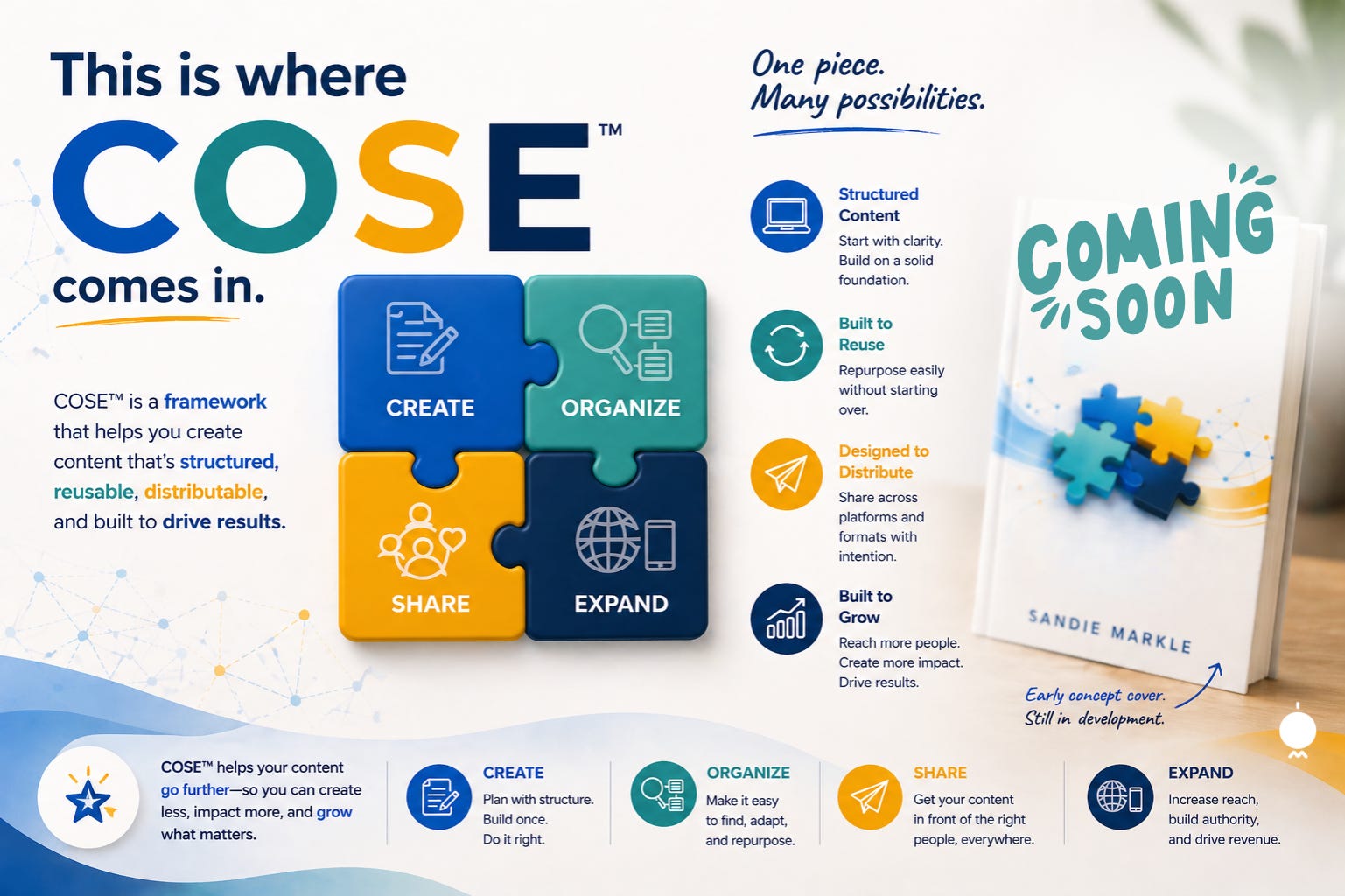
A quick update on the book
As you know, the first draft of Create Once, Share Everywhere™ was done last fall.
Since then, I’ve been heads down in developmental editing, which is less about fixing grammar and more about strengthening the thinking behind the book.
It’s where I step back and ask:
Does this actually make sense for the reader?
Are the ideas building in the right order?
Am I explaining this in a way that’s clear, not just correct?
It’s slower work, but it’s the part that turns a draft into something genuinely useful.
The manuscript is coming together, and I’m planning to send it to an early reader group in early summer. This part matters to me. I don’t wanna just get feedback; I wanna make sure what I’m building actually reflects what creators need right now, not what I think they need.
Over the next few weeks, I’ll be reaching out to creators who want to be part of that early reader group. If that’s you, keep an eye out.
Don’t call it a comeback. I’ve been here for years, and I’m just getting started.
If we haven’t met, I’m Sandie. Blueberri Pi is where I break down how food creators and content teams can make their work more structured, more discoverable, and more sustainable.
See you next Friday.