
I’ve sat inside food tech companies deciding how recipes get surfaced. I’ve worked with creators trying to understand why something that used to work suddenly doesn’t. I’ve helped teams launch features, fix workflows, untangle analytics, and make sense of systems most people never see.
And across all of it, I’ve watched the same pattern repeat, regardless of platform, audience, or scale.
Food content rarely fails with a loud crash.
More often, it fades. A recipe performs once, then quietly disappears. A video finds an audience, but nothing builds on it. A post does “well,” yet leaves no trace of where it should lead next. The work continues, the effort remains, but the momentum slips out of view.
This kind of quiet drop-off is confusing, especially for creators who are still showing up, still publishing, still doing what they were told works. Formats get tweaked. Platforms get tested. Output increases. The assumption is usually that the problem is effort.
It rarely is.
The harder question, the one that tends to surface only after frustration sets in, is not about reach or algorithms or optimization. It is more foundational than that.
What, exactly, is being built?
This issue of Blueberri Pi is a step back. A pause to revisit the framework that underpins everything I teach and write about content systems: Create Once, Share Everywhere™ (COSE). Not as a tactic or a trend, but as an operating system for work that is meant to last.
Meet Elena
What this looks like in practice is easiest to see through a creator who isn’t starting from scratch, but is still building with intention.
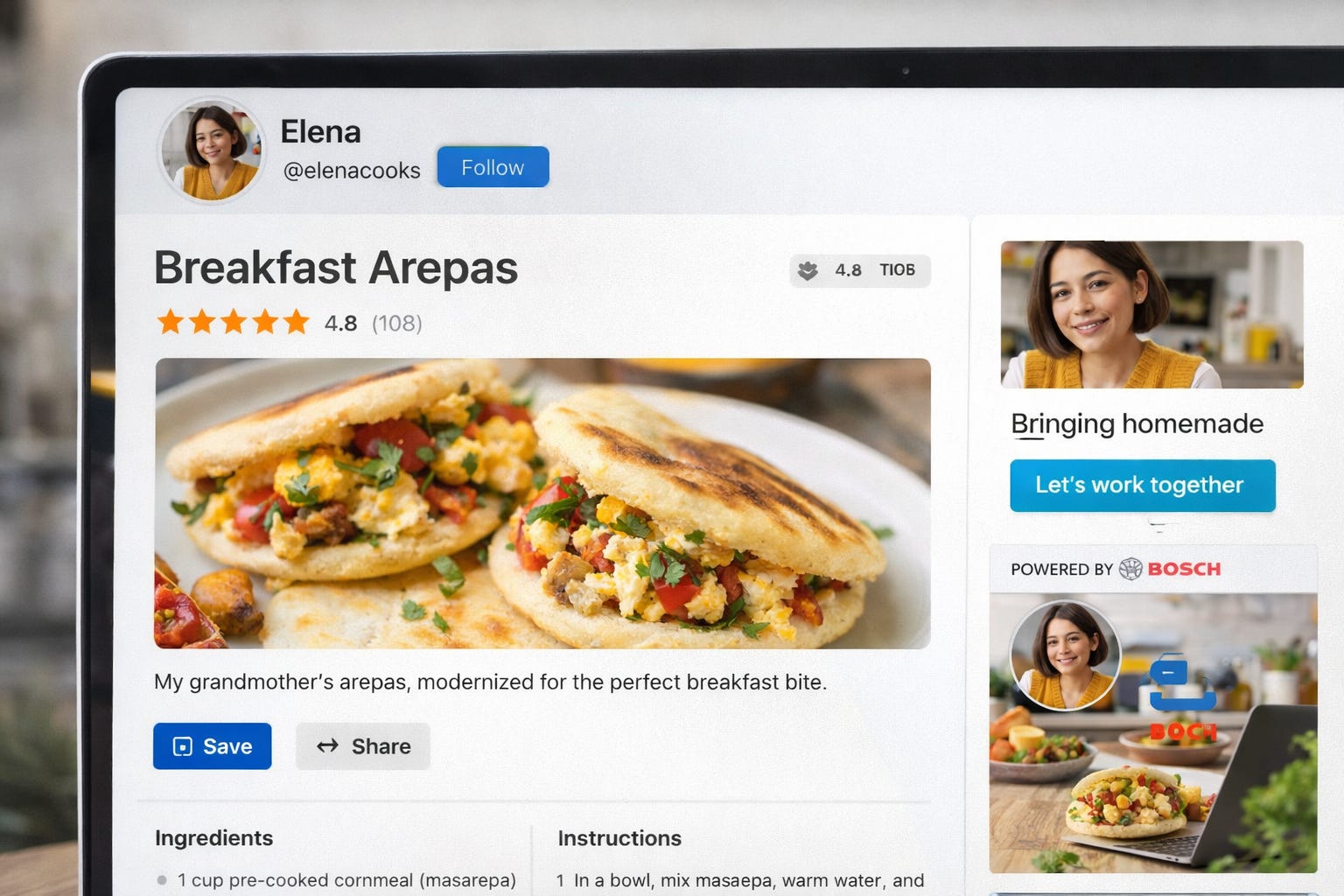
Elena is a food blogger with a new short bob for 2026 and a quiet confidence that comes from knowing her brand.
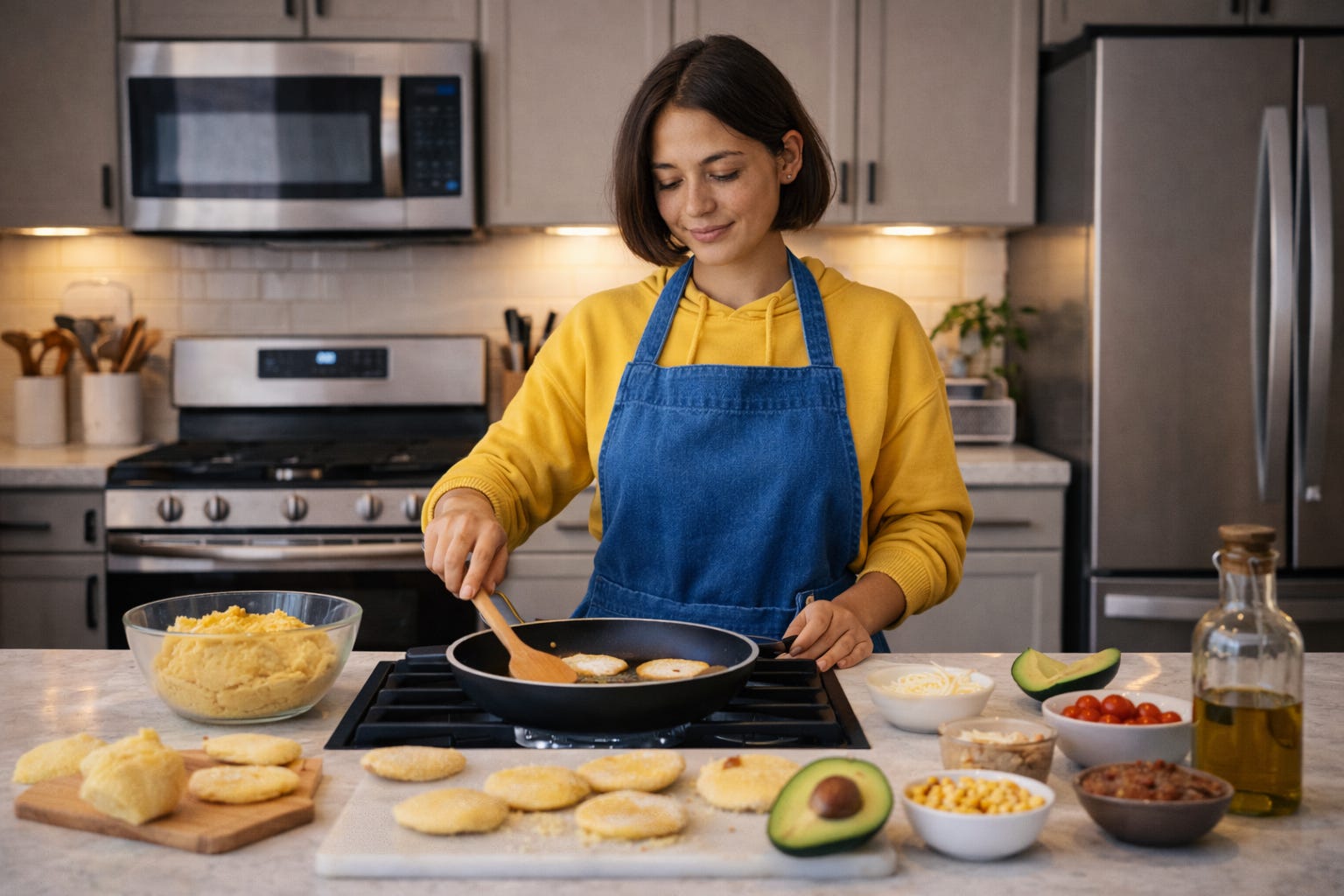
She makes breakfast arepas that feel effortless but intentional:cornmeal mixed just right, fillings that nod to her heritage, plated simply and clearly. Her recipes show up on recipe platforms. They get saved. They get cooked. They travel.
But Elena doesn’t just “post recipes.”
She negotiates partnerships, maintains an email list, and collaborates with brands.
She shows up on LinkedIn when she wants to be taken seriously outside the food space.
From the outside, it looks like she’s doing a lot.
From the inside, she used to feel as if she were managing four different versions of herself.

What changed for Elena
What Elena was experiencing isn’t unique, but she didn’t pivot or niche down further. She didn’t abandon parts of her business either.
She started treating her content as the connective tissue.
Her recipes weren’t just outputs anymore. They became anchors.
Each recipe was designed to:
Support discovery on platforms
Reinforce authority for partnerships
Feed her email list with context, not repetition
Exist as part of a recognizable body of work
Once that happened, decisions stopped feeling random.
She started asking, “What role does this play?”
That’s when things started to feel lighter.

The COSE™ Effect
COSE™ works because it connects what’s already there. I pronounced COSE™ as k-oz. Just in case you were wondering.
I use the word pillar when I talk about COSE™ for a reason. It’s because creators are often operating inside silos:
SEO over here
Partnerships over there
Monetization in one corner
Email doing its own thing
COSE™ reveals what’s already true.
When content is structured intentionally, it doesn’t just publish.
It supports. It connects. It compounds.
That’s The COSE™ Effect.
“How do you know you’re doing COSE™?”
I get asked this a lot.
Frameworks can get you the side eye, especially in an industry crowded with methodologies promising clarity and control. People want proof. Case studies. Before-and-after screenshots.
But the creators who are most successful with COSE™ rarely describe their work in those terms.
They talk instead about cohesion; things fitting together and a sense of ease and purpose. About content, finally feeling connected. About knowing what a piece is for before it is published. About no longer feeling pressure to be everywhere at once. About being able to explain, clearly, why something exists and where it belongs.

You know you are “doing COSE™” when your content starts to hold together without constant intervention.
You know you’re doing COSE™ when:
A recipe doesn’t need to be explained five different ways
One piece of work clearly leads to the next
Partnerships feel aligned instead of bolted on
Your content holds its shape, even when platforms shift
When content stops being the thing you constantly prop up and starts being the thing that holds everything else.
COSE™ exists to reduce that disconnect.
Can a creator be more than one thing?
Yes. Full stop.
Creators can teach and entertain. They can pursue partnerships and develop their own products. They can care about search visibility, emotional impact, and connection with readers.
Over time, many creators find their work split into functional silos. Partnerships live in one mental bucket. Ad revenue in another. SEO work here. Email marketing there. Social content is scattered across platforms, optimized differently, measured separately, and rarely connected back to a central purpose.
COSE™ exists because content should not feel like a collection of disconnected squares.
Each piece is different in texture and function, but they are stitched together by a single thread. That thread is content: created with structure, organized for reuse, shared with intention, and expanded for reach and revenue.
When that thread is missing, the work doesn’t disappear, it just doesn’t matter anymore.
Why COSE™ is built on pillars
I use the word pillar deliberately.
Each component of COSE™ carries weight, but none is sufficient on its own. Structure without intention becomes rigid. Sharing without organization becomes exhausting. Monetization without cohesion becomes brittle.
Pillars work together. Remove one, and the system begins to strain.
This is why COSE™ is not a checklist. It’s not a publishing workflow or a growth hack. It’s for creative work that acknowledges how content actually moves through platforms, audiences, and revenue systems over time.
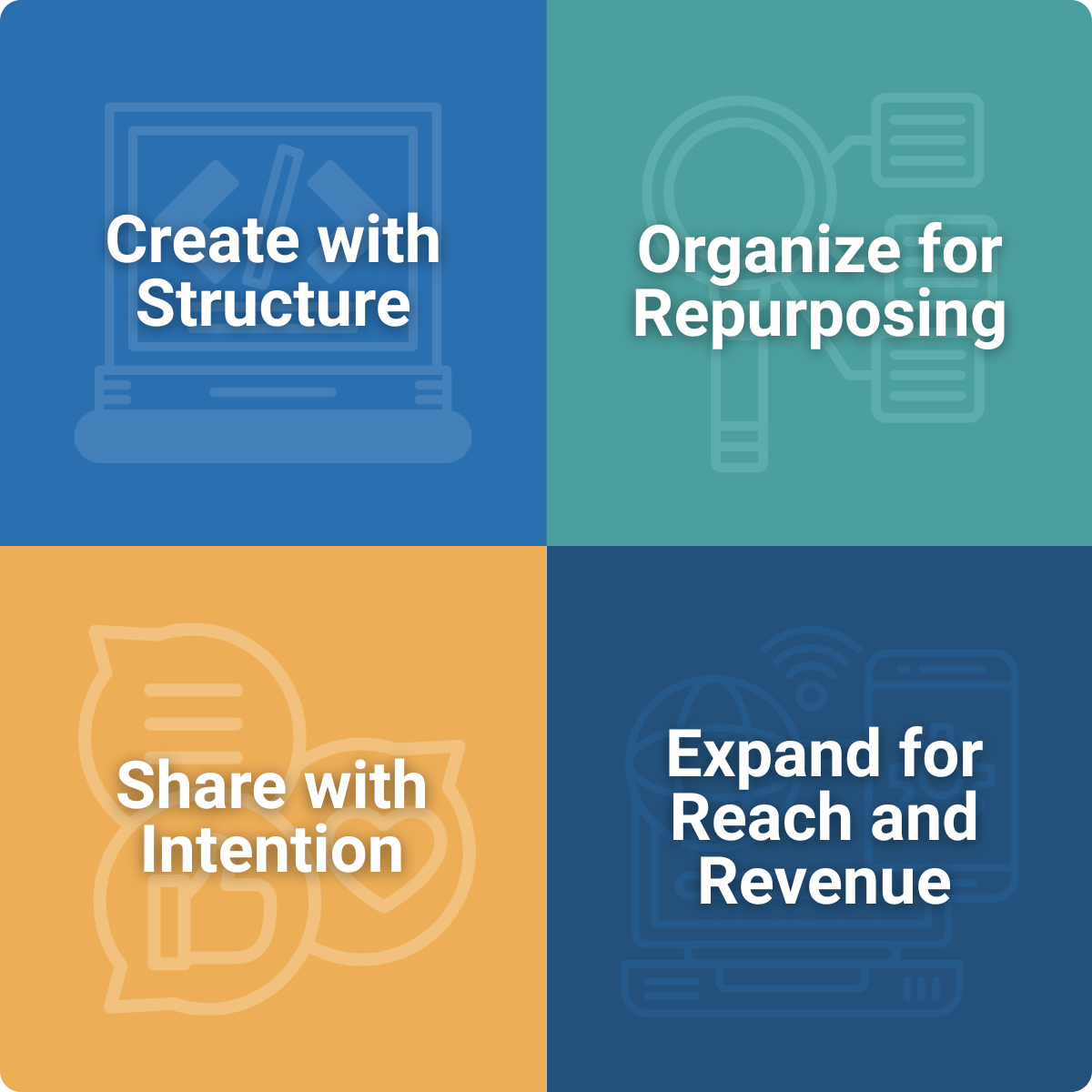
The four pillars—Create with Structure, Organize for Repurposing, Share with Intention, and Expand for Reach and Revenue—exist because creators struggle because one pillar is often forced to compensate for the absence of another.
Try this (15 minutes)
Open one recent recipe or piece of content and ask:
What does this support beyond itself?
Where does it naturally belong?
What should it lead to next?
Structure doesn’t limit creativity.
It gives it somewhere to live.
If you want to go deeper
This framework exists because creators kept asking the same questions in different forms:
Why does my work feel scattered?
Why does success in one place not translate elsewhere?
Why does everything rely on me holding it together?
COSE™ is how I help creators move from managing content to designing systems.
You can learn more about the framework here:
→ https://www.blueberri.co/cose
And if you’re ready to apply it step by step, I’m opening the first 4-week cohort of the COSE™ course on March 1.

For creators who want support in applying this framework to their own work, the COSE™ course is a practical extension of this thinking. It is designed to help creators see their content as infrastructure rather than output, and to build systems that can evolve without breaking.
The course is for those who want:
their content to work across platforms without duplication
partnerships, SEO, and email to feel connected—not siloed
systems that reduce re-explaining and reworking
a clearer sense of what each piece of content is actually for
You can learn more about the course here:
→ https://www.blueberri.co/cose-course
Blueberri Pi exists to help food creators understand the systems shaping discovery—and to remind you that you’re not building alone.
Start structuring your content so that it’s built to last. No burnout required.
Your friend in food 💙